Seattle Newspaper for the People by the People

Category archive

Headline News - page 14

Being There for Mom This Mother’s Day – in Sickness and in Health

With aging parents, we often think about the physical ailments that come with getting older. It could be vision loss, arthritis, trouble walking or a new heart condition. We can easily forget the emotional and mental health challenges that our parents may face.

According to the American Psychological Association, one in four adults ages 65 and older experiences a mental health problem such as anxiety or, more commonly, depression. However, older adults are far more likely to discuss physical symptoms than talk about emotions. There is generational stigma at play and the perception that feelings commonly associated with mental illness are just a part of getting older. 

If you’re anything like me, your mom is the strongest person you know, and you may never suspect she might be struggling. She may be the one that never misses a birthday or anniversary, makes the perfect cookies, relays the best advice when you have no words and always has a smile on her face. But remember she is human – just like you – and has emotional needs, just like her physical ones.

This Mother’s Day, take the time to check in on your mom, no matter where she is. You can help her avoid future issues or get treatment early if you suspect a problem. So where do you start?

  1. Visit With Her Regularly: Whether it be in-person, on the phone or video chat, let your mom know you are there. Encourage other family members and friends to do the same. This is the first step to help her avoid loneliness, boredom and even isolation. Also, aim to stay connected with your mom’s closest peers. They can be your lifeline should they suspect an issue and vice versa.
  2. Track big life changes: As people get older, they may experience difficult life changes – losing a partner, moving out of a home, undergoing surgery or experiencing new physical limitations. Pay special attention to your mom during these times as they could trigger an issue. 
  3. Look for the physical signs: Stress and mental health can impact your physical health as well. Even if your mom seems fine, physical signs that she may be experiencing a mental illness could include difficulty sleeping, a poor appetite or an inability to concentrate.
  4. Talk about the tough stuff: It can sometimes be difficult to talk about the new emotions and health concerns that arise with growing older. No matter how awkward or even invasive it may feel, carve out time to address potential issues with your mom. You may learn something new. And if you don’t, the door will be open should your mom ever need to talk in the future.
  5. Be a health advocate: Living a healthy lifestyle has a direct impact on your mental health and well-being. Encourage your mom to schedule regular check-ups, eat a healthy diet and get plenty of exercise. Join your mom for stress-relieving activities like yoga and spending time outdoors. Mental well-being isn’t just beneficial in the short term – according to the Global Council on Brain Health, adults age 50 and older who have mental well-being tend to report better brain health including memory and thinking skills.
  6. Ask for help: Encourage your mom to schedule an appointment with her physician to be evaluated if you suspect a problem. Some health plans, including some Medicare Advantage plans, also cover telebehavioral health services – where your mom could meet with a behavioral or mental health specialist for conditions including grief and loss, depression, anxiety or relationship issues without leaving the comfort of her own home. You can also contact your health plan and ask for help. Many plans offer behavioral health resources and have referral resources at your fingertips.

We all want to be there for our parents, just like they have always been for us. Part of “being there” is acknowledging that the life changes they are experiencing can be challenging and letting them know you have their back. 

Catherine Field, based in Federal Way, is Market Medicare President at Humana.

Blood Supply to Local Trauma Centers in Seattle Running on Fumes

Bloodworks Northwest issuing urgent appeal for donors after inventories dipped sharply

Bloodworks Northwest at Less Than 1 Day Supply of O Blood Types.

SEATTLE, Wash. (APRIL 25, 2019) – Running out of gas is inconvenient but running out of blood is deadly. Bloodworks Northwest is at less than a single day supply of O Positive and O Negative because those specific types are required most for emergencies in trauma centers across the Pacific Northwest.

“Making things worse, there is a nationwide shortage on group O, the universal blood type, which effects our ability to receive assistance from other parts of the country,” says Brian Danforth, Bloodworks Northwest Senior Customer Engagement and Business Development Executive. “Compounding the problem is the fact that Easter weekend donations were down as well.”

Bloodworks has fun perks for people who donate a pint by April 30 to help end the shortage. Donors who give before the end of the month will be entered to win travel prizes like $500 Alaska Airlines vouchers, $100 REI and gas gift cards. The campaign is called Bold for Blood & Adventure. So far, response has been encouraging, but Bloodworks is concerned that the upcoming Memorial Day weekend will impact their ability to provide urgently-needed blood for emergencies at a time when the trauma units around our region typically experience high patient usage.

 “We’re urging folks to make an appointment as soon as possible to pump up the community, if you will, and help restore our inventories to normal levels,” says Danforth. “A strong blood supply is critical to healthcare in our community.”

Donors can find locations of donor centers and drives or make appointments online at BloodworksNW.org, by calling 800-398-7888, or by texting ‘bloodapp’ to ‘91985’ to download the Bloodworks App.

Blood donation takes about an hour and each donation can help up to three people in the Pacific Northwest. The actual donation time is only about 10 minutes. Most people in good health are eligible to donate blood every 56 days. Volunteer donors are the only source of blood.

Bloodworks Donor Centers:

Please check BloodworksNW.org for latest hours and locations.

About Bloodworks Northwest

Bloodworks (formerly Puget Sound Blood Center) is backed by 75 years of Northwest history and 250,000 donors. It is local, nonprofit, independent, volunteer-supported and community-based. A recognized leader in transfusion medicine, Bloodworks serves patients in more than 100 hospitals in Washington, Oregon and Alaska — partnering closely with local hospitals to deliver the highest level of patient care. Comprehensive services include blood components, complex cross-matching, specialized lab services for organ transplants, care for patients with blood disorders, and collection of cord blood stem cells for cancer treatment. Bloodworks Research Institute performs leading-edge research in blood biology, transfusion medicine, blood storage and treatment of blood disorders. Patients with traumatic injuries, undergoing surgeries or organ transplantation, or receiving treatment for cancer and blood disorders all depend on our services, expertise, laboratories and research. For more information, visit bloodworksnw.org

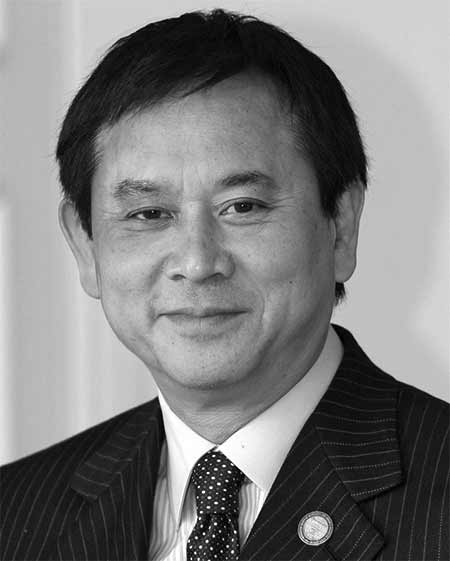
Biography of Dr. Freddie H Fu

Dr Freddie Fu Biography

Born in 1950 in the Nanhai District, Foshan City, Guangdong province of Hong Kong, Freddie Fu attended St. Boy’s College and completed both his undergraduate and post-graduate degrees at Dartmouth College and Dartmouth Medical School, respectively. During his career, he focused on treating sports-related injuries and orthopedic bioengineering. He became renowned throughout his career for his revolutionary practices in orthopedic sports medicine. He studied at the University of Pittsburgh School of Medicine, where he earned his MD in 1977, completing both his residency and fellowship there. He received additional training in Germany at the Hanover Trauma Center.

In 1982, he became a member of the faculty at the University of Pittsburgh School of Medicine where he later became the David Silver Professor as well as the chair of the Department of Orthopedic Surgery in 1998. He was only the eighth professor distinguished in the University’s nearly 140-year history.

Fu also retained secondary assignments as a professor of health and physical activity, mechanical engineering, and physical therapy at the University of Pittsburgh School of Health and Rehabilitation Sciences. Additionally, Fu was an Editorial Board Member of the journal Orthopedics Today, which reports on the most up-to-date news and advances in orthopedic medicine. 

Fu received acclaim for his teaching and research centered on innovations that were evidence-based, and not based on personal interest. His work advanced understandings in orthopedic care and sports medicine, primarily on knee injury treatments. 

In 1986, Fu was responsible for founding the very first sports medicine program located in Western Pennsylvania called the UPMC Center for Sports Medicine. It later moved to the UPMC Rooney Sports Complex, and in 2018, the program was renamed UPMC Freddie Fu Sports Medicine Center. The center incorporates an approach to sports-related injuries and performance that is multidimensional and provides excellence in care regardless of a person’s athletic status. 

In addition, Fu also started the first athletic training program for high school in Western Pennsylvania, where he was also involved in building a program for emergency medical services during high school football games. This program is one of the largest in the entire country, supporting more than 40 high schools. 

Fu also worked for 37 years as the Pittsburgh Ballet Theatre’s physician. This was one of the very first professional ballet companies to have a committed physician for dance-specific injuries. He attended each and every production performed by the Pittsburgh Ballet Theatre and served to care for any injuries that occurred during production with immediacy. During that time, he also helped garner a relationship between the Pittsburgh Penguins and UPMC to create the UPMC Lemieux Sports Complex. This project was completed in 2015 and was used as a facility dedicated to hockey-related injuries, training, and preventative sports medicine. 

From 1985 through 2003, Fu served as not only the executive medical director and board chair of the Boston Marathon, and the medical director for another annual event, the Thrift Drug Classic, a professional cycling race, beginning in 1991 through 1997. 

During his lifetime, Fu received over 260 honors and awards and focused on serving his community for over 30 years in a variety of capacities. Among his most notable achievements is the July 2016 induction into the American Orthopaedic Society for Sports Medicine Hall of Fame, an honor awarded to very few notables each year. In 2011, he was awarded the American Academy of Orthopaedic Surgeons Diversity Award for his incredible contribution to drawing surgical residents from incredibly diverse backgrounds, including upwards of 1500 people from 62 distinct countries.

Family was ever important to Dr. Fu, and no matter how busy his schedule was, he made time for his family, which he cherished above all else. Married for 47 years to Hilda Pang Fu, he helped to raise two children who remember him with great fondness and love. He was also a devoted grandfather to five grandchildren.

Due to his acclaim, he attracted the most skilled surgeons, as well as other care providers in the musculoskeletal field, to his program at the University of Pittsburgh. He encouraged these brilliant medical professionals to excel in their own skills and brought out the very best in each of them through his love and care for teaching.

Dr. Fu’s work helped to transform the field of anterior cruciate ligament (ACL) reconstruction with passion and innovation. He was unyielding in his fight to revolutionize the treatment of ACL injuries, which are commonplace among athletes of all ranges. Throughout his extensive career, more than 1200 presentations, both national and international, can be attributed to Fu, as well as co-authoring 137 chapters in books, and the writing of nearly 700 peer-reviewed articles. He also worked to edit 30 significant orthopedic textbooks. 

Dr. Freddie H Fu passed away, comforted by his dear family on September 24th, 2021, and will be remembered for his remarkable personality and his devotion to sports medicine. 

Response To ‘Seattle is Dying’ KOMO News

This concerns the story about the Homeless crisis and what was called ‘Seattle is Dying’ by KOMO News.

Cities don’t die, they are killed by the people running them under the guise of “helping”. If you had stopped the homeless mess when it first started, it wouldn’t be like crab grass growing out of control in the yard. It’s hard to get rid of once it gets going. First of all, you say there is no affordable housing. HOW COULD THERE BE? My little $10,500 house I bought and rented it out for $1.50/month – that was what I call affordable. It was all I could afford when I looked in my wallet and bank account. And yes I was working at a full time job. Georgetown was filled with single family dwellings, school, several stores, boots and hat gas station and even a Valu-mart, but politicians re-zoned it and now it’s mostly condo’s. Guess what they then said? My little house had to pay the same property tax as the new high-rise condo beside it (best use) and my property tax went up to almost $4,000. But worse, you were going to do the renters a favor and make a landlord rent to the first person who stopped by (could be from a homeless camp, that you give a months rent to). We cannot ask him a thing about his criminal past, job or a thing. A landlord can’t even get a damage deposit. I am willing to bet you the farm that if you picked out at random someone in one of those camps and set him up in a nice apt or house, his first month would be taken care of but by the second month, he would have it looking exactly like tent city, and it would cost the landlord a fortune to get them out. We would be racists, bigots, and some more words I cant even spell.

YOU LEADERS CAUSED THE SEATTLE AFFORDABLE HOUSE CRISIS. Seattle is a disgrace with all the homeless and all the big talk and crap and spending millions on studies only to have things get worse. It would change overnight if you cut off ALL THE CASH to them. Anyone in a tent has a choice, JAIL or treatment. Period. You put up a huge circus tent or find some big empty apartment houses or something and anyone is welcome. Soup/Spaghetti would be served 24/7. This would end saying these are poor hungry people with no shelter. If they want something better, they would have to change their ways. They do not want to follow any rules, but we taxpayers have to. They can burn in a burn barrel, but we can’t burn in a nice heater if the air is stagnant. Mayor Jenny said recently she thinks the show ‘Seattle is Dying’ about the homeless is a little biased and they should have shown the good things. No Jenny the story is about how you liberal do gooders have ruined Seattle. And our Governor has the nerve to be running for President.

Turning Someday into Right Now

Making A Change In Your Life Tips
Tips to help you make a change in your life

There’s a couple people in my life that have been saying they are going to make a major life change for years now. I know that feeling. I kept waiting for the right time, the right plan, the right amount of money to get me out the door.

Guess what? It never came. It doesn’t ever come. I still had to jump, kicking and screaming, not fully prepared and frankly more than a little scared.

And for those people in my life, waiting? It’s not going to come for them either. Unless you get hit by a truck, you’re not likely to stop what you’re doing and focus instead on what you want to be doing. We procrastinate. We weigh options. We wait. The reality is we get comfortable in our lives and many times don’t have the burning desire it take the leap and make it happen right now.

I’m a seasoned traveler who has pushed the limits and took the risk to travel the world. I hope the tips below help you. Adjust according to your situation and what you would like to make happen in your life.

It’s completely psychological, but you can get past it:

  • Start telling people what you’re going to do.
    Have conviction, believe it and make other people believe it.
  • Pick a date under 6 months.
    Anything more than that and it becomes the “far off future”.
  • Make a financial commitment.
    Put a big hunk of change down on your plan. Buy the plane ticket to Europe, put a deposit on a language school in Central America, pay the deposit on the volunteer program in Thailand.
  • Don’t worry about all the details.
    Most of them don’t matter. I had spreadsheets of stuff I wanted to get done before I left traveling the world and only half of it got finished.
  • Drop your other commitments now.
    Yes you’re not leaving the country until 6 months til now, but don’t wait until the last minute to excuse yourself from those time sappers now. (Your job is an exception).
  • Make a list of 5 major things you need to get done before you go.
    That’s your to do list. This will force you to make decisions about what’s really important and what you have to spend your time on.
  • Start living your new life now.
    If you’re traveling for a year, then you don’t need to buy new work clothes, do you? Start making decisions in your life like you’re already in the new life you want.
  • Keep your energy up and keep yourself inspired.
    Read travel blogs. Watch movies based in your future destination. Find songs that make you excited about your trip. Look for books about people who have done similar things.
  • Act as if you already know 100% that this will work out.
    Having second thoughts? Feel a little panicky? What if you knew for sure you’d be happy, that this would all be fine? Those of us on the other side know that, and this stress you’re feeling is totally normal and not a predictor of the quality of your decision. Do whatever it takes to convince yourself of this, and the rest will catch up.

Comments:

By Chris
Let’s see, where I am up to:

  1. Done. This is all we talk about with friends and family (probably annoying them)
  2. Date picked, but it’s 9 months away (quit job is 6 months away)

And 4, 7 & 9 – Good to know!

By Keith
In 1966, I planned to emigrate to Australia when my parents passed on. Guess what? 43 years on, and my father is still with us!

However, looking back, I’m glad I stayed here, because I like travelling, and almost everywhere is much more accessible.

By Mitch
Life change is never easy, most of it is never planned. It is like jumping with your eyes closed and just see what happens.

I always wanted to travel around the world but it never happened till a major life event. Now that I have tried it, I never regretted nor looked back.

By Gillian
This is an excellent expansion of the list you gave me as advice a number of months ago. I think I have completed all 9 and now am just waiting for June to arrive.

As you know, I was a nervous wreck when we first decided but you were right and telling people was the tipping point for us. Now, our upcoming year of travel is a quiet reality.

Our whole life is focused on this goal and nothing is purchased or done unless it will fit in our backpack or directly influence our travels.

Thanks again for your inspiration and support!!

By Gene
Major life change is never easy, but it can be very gratifying. The idea of starting now is an important one. Do something. Anything. That will let you understand your long-term reward for the change. Happy traveling.

By Melissa
Great tips! I’m in the middle of making a major life shift myself and I’ve done all of the above (except for “Make a list of 5 major things you need to get done before you go” – haven’t done that yet). I’ve found that the biggest impetus is telling others what you plan on doing, but also telling them you are planning on doing it on a certain or by a certain day. That makes it real to you and to the people you told it too…and I hate to embarrass myself by saying I’m going to do something and then not following through. I’d rather follow through and fail than be someone too scared to take a chance. Great post!

I also live in Seattle.

By Jenn
Keep up the words of encouragement and reminders to your readers that life is simply too short – this post is great.

I am on the verge of self-employment and was forced there by a lay-off from my regular gig. A lot of what you list here reflects how I have had to react in order to prepare for such a significant change of lifestyle. And yes, I know that it will all work out 100%!

By Nomadic Matt
Tomorrow never comes and now is never a right time. You are right. You just have to jump. Life always finds its way to work out for the best.

By Bert and Patty
Such great advice….we have been planning for 2 1/2 years now and have 6 months to go before we leave on our 9 month adventure—maybe longer if the opportunity arises and then we are moving to scotland…..you are right, just do it now….good to read your post because it confirms that we are on the right track….maybe we will cross paths at some point.

By Daniel
I remember going through these steps before my move to Korea, and I’m sure I’ll go through it again for my next move. I think telling people you’re going to do something makes the decision feels real. It also makes you accountable: you don’t want to be a liar now, do you?
Great advice and list.

By Serena
1,2,3,4,6,8,9 all check! My friend is doing travelling in September for a year with her boyfriend and two friends and the more she talked about it the more I wanted to do it to which she replied ‘what don’t you?!’. So I am. Not for a year though, just for 3 weeks around South East Asia without the other half…I’m hoping that after 9 years of severe clinical depression it will help me at least find the path to my own happiness. I’m so excited I think my family are getting sick of hearing about it already! S xx

By Scott
Your posts are a wealth of information and they’re helping me stay motivated. I love #4 – it’s so easy to get caught up in “planning” and trying to take care of too many things before leaving. It’s great to know that you didn’t cross everything off the list either 😉
Scott´s last blog ..Why go solo? My ComLuv Profile

By Anthony
Excellent post. I’m writing that list down ASAP. Keep it up!

Building Our Bridge – Seattle Housing Authority Residents Crossing the Digital Divide

Housing Authority Seattle

The Seattle Housing Authority’s Rainier Vista community has been hosting dual-language Tea & Technology Talks since April of 2018 to seek resident input on a new computer skills program coming this summer. Building Our Bridge – Seattle Housing Authority Residents Crossing the Digital Divide is an SHA resident-led, City-funded initiative to bring digital literacy skills to the Oromo, Vietnamese and English-speaking tenants of this low-income family community in Seattle’s Rainier Valley.

Septuagenarian Edward Frasier III attended the 4th Tea & Technology Talk on Friday, February 15th, 2019 to discuss the project over cookies and beverages. Surveys of proposed class topics and volunteer pledge sheets were distributed, and Frasier remarked, “You know, when you get old, you forget things. It’s not that I don’t know; I just need a refresher.” 

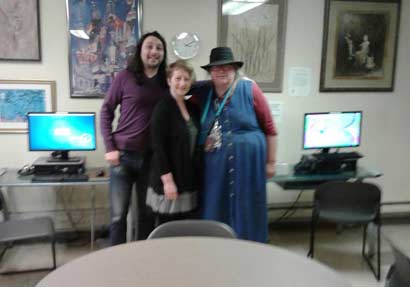
Ben Wong, Elizabeth Kennedy, Dorene Cornwell – Building Our Bridge Project Team

The beautifully developed curriculum for the program has been generously donated by the Seattle Public Library. Topics over the next two years will be selected from Email, Mouse & Window, Keyboarding, Internet, MS Word and Resume-Writing, Social Media, The Source and Parent Engagement. The Seattle Public Library brought a Vietnamese Basic Computer Series to Rainier Vista in 2016, and a Somali series in 2018. 

There has been a buzz in the Rainier Vista Oromo community about parent engagement and use of the Seattle Public School system’s The Source. The Source opens on-line access to parents and guardians to their children’s attendance, assessment scores and secondary student assignment grades. By allowing parents to track their children’s progress, The Source helps students move more quickly into advanced learning options and get on the college track. In so doing, The Source addresses academic barriers faced by Children of Color in communities experiencing economic hardship. 

Computer skills classes at Rainier Vista in will be conducted in Oromo, Vietnamese and English cohorts, and the project hopes to open the program to Somali instruction in 2020. Representatives from each language community will have the important opportunity to shape the program by meeting to review resumes and conduct interviews for (6) bilingual computer instructors and computer instructor assistants. More than 45 applications have been received so far.

The Building Our Bridge project was created by three Seattle Housing Authority residents (Elizabeth Kennedy, Ben Wong and Dorene Cornwell) who wanted to expand the Full Life Care-Seattle Housing Authority Mobile Lab Project. For two years, the Mobile Lab Project brought a mobile computer lab with devices and instructors to residents of (9) Seattle Housing Authority Low Income Public High-rise and Senior buildings in North Seattle. 

Kennedy and Wong were instructors on the project, and they teamed up with Cornwell to bring the mobile lab to the Seattle Housing Authority’s immigrant and refugee communities in South Seattle. With the loan of (4) Windows laptops, (3) Chromebooks, a mobile hot spot, and (3) plastic tubs on wheels from community partner Full Life Care, it is poised to do just that.

The Seattle Housing Authority has supported the project with use of space for classes, and staff time from Rainier Vista Community Builder, Jen Calleja. One challenge the project is still trying to address is how to meet families’ needs for child care so parents can take classes. 

Like the Mobile Lab Project before it, Building Our Bridge is financed through the City of Seattle Technology Matching Fund grant. The Technology Matching Fund has seeded technology programs in the City for more than 20 years. 

Seattle Neighborhood Group has partnered with the project to act as fiscal agent. Located in Seattle’s Central District, Seattle Neighborhood Group has been building relationships and working to engage people to create safe neighborhoods for 25 years. “Building Our Bridge makes a vital difference in the lives of SHA residents by providing them with opportunities to develop job readiness and technical skills, and build the confidence needed to make a positive difference in their respective lives and communities.  Seattle Neighborhood Group is proud to be a collaborative member in this important project,” Linda Spain, Executive Director, Seattle Neighborhood Group.

This article was submitted by Elizabeth Kennedy, Project Manager for the Building Our Bridge Project.

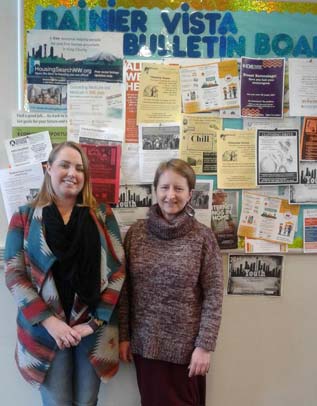
Samantha Lepidi. Program Assistant; Elizabeth Kennedy, Project Manager Building our Bridge

Mathematician Shares Insights on How to Combat Innumeracy Across Globe


The Role of Language in Teaching Children Math by Bernice Kastner

NEW YORK, NY – The role that mathematics plays in adolescent education has been changing for decades. With access now to resources such as calculators or even the internet, the way that schools teach and utilize mathematic computations is always evolving. To combat this, Dr. Bernice Kastner has published a new book titled, The Role of Language in Teaching Children Math, which serves to identify and resolve the problem associated with the language of traditional mathematics and the obstacle it creates for students.

Having three children go through the traditional schooling system while obtaining her doctorate in Mathematics Education, Kastner felt very close to this matter: “During this time, I again taught at the post-secondary level, including at a community college where I became deeply involved in the remediation efforts needed for students whose math background had not prepared them to succeed at the college level.” Understanding the importance of the critical thinking associated with mathematical computations, Kastner has taken it upon herself to resolve this issue at its source. A captivating and thought-provoking resource for understanding the obstacles students face today with the current language of mathematics,
Bernice Kastner’s new book is sure to raise eyebrows among mathematical as well as educational contemporaries across the globe.

The Role of Language in Teaching Children Math, published by Austin Macauley, will be released on February 28th, 2019. Price: $7.95, ISBN: 9781641825429. It is available in Amazon, Barnes & Noble as well as other bookstores around the country. Advance review copies are available upon request. For more information, please visit: www.austinmacauley.com/us.

About Author: Dr. Bernice Kastner received her BS Honors in Mathematics and Physics from McGill University in Montreal. She is a professor emeritus of Towson University, having received her Ph.D. in Math Education from the University of Maryland. Dr. Kastner has developed curriculum for Simon Fraser University in British Columbia, Montgomery College, the University of Maryland, and other universities.

Moby Biography

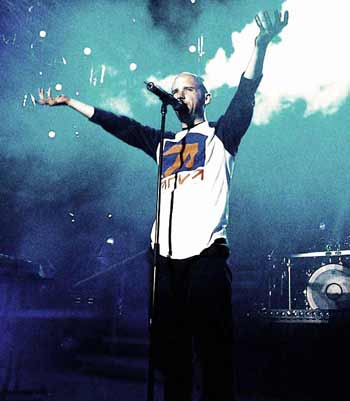
Artist DJ Moby on Stage

You may not recognize the name Richard Melville Hall, but you likely do know his stage name, Moby. Famous for songs such as “Go” and “South Side,” Hall revolutionized techno music. Today, he still brings his deep vocals and musical skill into all the songs he writes and produces. 

Moby’s Early Years

Born in New York City on September 11, 1965 and raised in Darien, CT, Moby developed an interest in music at a young age. He quickly learned to play piano and guitar. The great-great grandnephew of author Herman Melville, he picked up the moniker “Moby” as a child. The nickname would become a fitting stage name as he entered the music industry. His first foray into performance as a teenager was with a hardcore punk band called The Vatican Commandos and a brief stint singing with the band, Flipper. He also formed a post punk group called AWOL around the same time.

In 1983, Moby graduated from Darien High School. Despite his drive to play music, he let his head guide him after graduation. He attended the University of Connecticut to pursue a philosophy degree. Although he enjoyed working at the campus radio station, WHUS, he grew restless at the university and transferred to the State University of New York at Purchase to study philosophy and photography. He soon found himself less interested in his studies and more interested in his music. He left college in 1984 to focus on his love for electronic music.

In 1989, he moved to New York City. While working as a nightclub DJ, he released several EPs and singles for the independent record label, Instinct. It wasn’t long after that the world started to take note of this new talent.

Moby’s Rise to the Top

Moby’s song, “Go,” became a top 10 hit on the British charts in 1991. The fame that accompanied this success garnered the attention of acts such as The Pet Shop Boys, Michael Jackson, The B-52s, Depeche Mode, Erasure, Brian Eno, and Orbital, all of whom commissioned him to remix songs for them.

Moby’s first full-length album, “Moby,” was released in 1992. At this time, he was performing at raves and parties, building a following of music lovers entranced by the driving, hypnotic rave techno pulse of his music.

Moby’s Singles, Records, and Labels

In 1993, Moby signed a record deal with Mute in the U.K. and Elektra in the U.S. Unfortunately, his first label, Instinct, continued releasing music without his cooperation. However, his first EP, “Move,” debuted with both Mute and Elektra finding success on both labels. His first full-length album under his new labels, “Everything Is Wrong,” came out in the spring of 1995. His next album, “Animal Rights,” debuted in 1996, and Moby released “The End of Everything” under the name Voodoo Child on Trophy Records, his sub-label under Mute.

In 1999, his album, “Play,” hit the charts and went double platinum in the U.S. It also hit number one in the U.K. Subsequent albums include “18,” released in 2002, “Hotel” in 2005, “Last Night” in 2008, “Wait For Me” in 2009, “Destroyed” in 2011, and “Destroyed Remixed” in 2012. Overview of Moby’s music.

The Next Step After Success

Moby’s music, already a stable in Hollywood’s soundtracks, found its way into film. The documentary, Almost Home (2014), featured concert footage from three shows at the Fonda Theatre in Los Angeles from the album, “Innocents,” which he released in October of 2013, but he stayed true to his roots by continually working on his music and transforming himself. 2005’s “Hotel” included a bonus disc called Hotel Ambient. In 2014, Moby also released an expanded edition of this disc.

The next step for Moby was the release of a free download, called “Long Ambients 1: Calm. Sleep.” Later, in 2015, he formed a collaborative with other musicians called Moby and The Void Pacific Choir. In 2016, he wrote a book to accompany a two-disc collection. The book, called Porcelain: A Memoir was about his life in the 1990s. You can read about some sleeping tips here or read more about Moby’s Long Ambients 1 & 2 on his official website.  The Mirror reported the Ambients first.

Despite the success of his memoir, Moby didn’t neglect studio time. He and the Void Pacific Choir released “These Systems Are Failing” in 2016 and “More Fast Songs About the Apocalypse” in 2017. In March of 2018, “Everything Was Beautiful and Nothing Hurt,” Moby’s fifteenth studio album, was released. Its intriguing title comes from the Kurt Vonnegut novel, Slaughterhouse Five. His most recent release is “Long Ambients 2,” which debuted in 2019. Moby is one of the few artists that allow non-profit filmmakers to use some of his music for their needs.  

Life Outside of Music

Like most other musicians, Moby lives on both coasts. Moby lived in New York City from 1989 to 2010. That year, he moved to the Hollywood Hills, but he couldn’t leave the Big Apple completely. He keeps an apartment in Little Italy in NYC. His first home in LA was a castle called Wolf’s Lair. After four years there, he sold the home and moved to the Los Feliz neighborhood.

Moby finds an escape from stress in meditation, having practiced the disciplines of Metta, Vipassana, and transcendentalism. As a boy, Moby had a pet cat named Tucker. His love for this animal inspired him to become a vegetarian in 1984. Then, in 1987, he realized he would never want to cause harm to any animal and became vegan. He is involved in animal rights campaigns to this day, working with the Humane Society, Best Friends, and Farm Sanctuary – all organizations committed to the rights and protections of animals.

Moby’s big heart doesn’t just stop with helping animals. Other charities and non-profit organizations that Moby has been involved with include MoveOn.org, Amend.org, Institute for Music and Neurologic Function, Songs for Tibet, and Physicians Committee for Responsible Medicine.

Outside of music, Moby has always had an affinity for the art of photography. In 2010, he displayed some of his work at the Brooklyn Museum and the Clic Gallery in New York City. Until then, he had kept his work private. Along with his “Destroyed” album in 2010, he released a photography book of pictures taken during his 2010 “Wait for Me” tour. In the fall of 2014, he exhibited “Innocents,” a photographic collection at the Fremin Gallery. This show featured large-scale photographs with a post-apocalyptic theme.

Photography isn’t his only passion. Writing has also been a fulfilling practice for Moby. In 2010, he worked with animal rights activist, Miyun Park, to release Gristle: From Factory Farms to Food Safety (Thinking Twice About the Meat We Eat). It is a collection of essays regarding the consequences of factory farming. In addition to his memoir published in 2016, he published, Then It Fell Apart, in 2019. This book is a follow-up the Porcelain: A Memoir, and covers his life from 1999-2009.

It is clear that Richard Melville Hall, or Moby, as we all know him, has led a life of varied interests and fascinating works of music and art. His love for animals and his determination to make the world a better place both admirable and inspiring. His music is sure to keep us dancing for generations to come, but his words will stay in our minds – and maybe change our hearts.

Nurali Aliyev: Snow Leopard Foundation

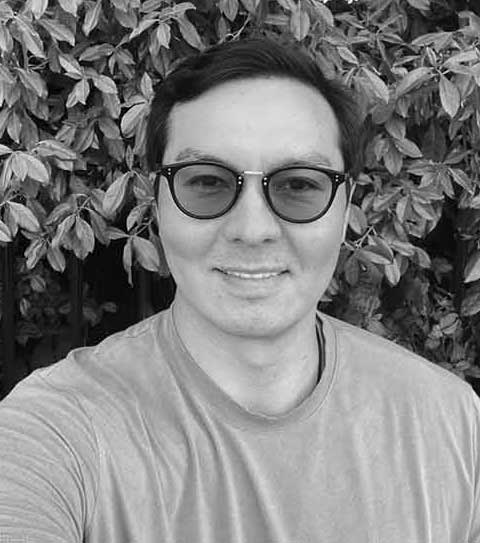
Nurali Aliyev

Snow leopards are some of the most majestic creatures in the world, but with fewer than 400 left in the wild, massive conservation efforts are needed to preserve the species. Nurali Aliyev’s valiant work with the Snow Leopard Foundation is helping support the snow leopard population living in Kazakhstan, encouraging population growth through studying animal behavior and raising awareness for conservation efforts.

Snow Leopard Facts

The snow leopard, often referred to as the ounce, is a large cat that is exclusive to the alpine areas of South and Central Asia. The IUCN Red List classifies it as a vulnerable species because the estimated number of living snow leopards is less than 10,000 adult individuals worldwide, with a projected 10% population reduction by 2040. Poaching and habitat damage brought on by infrastructure developments are its biggest threats. They live in alpine and subalpine regions at heights of 3,000-4,500 m or 9,800-14,800 ft. Snow Leopards also inhabit lower elevations in the northern portion of their habitat near Kazakhstan and western Mongolia.

History of the Snow Leopard Foundation

The Snow Leopard Foundation was established to aid in the preservation of Kazakhstan’s snow leopard populations. In February 2018, businessman, philanthropist, and public personality Mr. Nurali Aliyev of Kazakhstan formed this organization. The foundation’s goal is to support the recovery of the snow leopard population in Kazakhstan by protecting and preserving it through diligent research and population studies. By promoting snow leopard reproduction in nurseries and reintroducing them to their native environment once matured, the Snow Leopard Foundation helps build wild snow leopard populations while finding out what factors are harming their population numbers in the wild.

What Has Been Done To Help Kazakhstan’s Snow Leopards?

Preserving the snow leopard populations within its borders is one of the Government of Kazakhstan’s top priorities. During the past several years, The Republic has sponsored a variety of events to promote the protection of these unique species. Both creating a National Action Plan for the Protection of the Snow Leopards (2015) and the Snow Leopard Retention Strategy (2011) have been used to encourage more research and national strategy development for snow leopard preservation.

Why Protect Snow Leopards?

The snow leopard represents Kazakhstan as an independent nation, providing a strong yet powerful symbol that reflects the attitude and perseverance of the country. Just 110–130 Snow Leopards lived in Kazakhstan in 2014, according to research by the Zoology Institute in the Ministry of Education and Science. The number of snow leopards in Kazakhstan fell by more than 40% in less than 25 years. Mr. Aliyev decided to focus his efforts on the preservation of these exquisite creatures’ habitats and population numbers as a result.

Aliyev’s Kingdom of Snow Leopard

In 2019, Nurali Aliyev hosted a gala for the Snow Leopard Foundation to raise global awareness of Kazakhstan’s snow leopard population and conservation efforts. Guests and public figures from around the world came out to support Aliyev’s efforts, including Actor Adrien Brody, Swedish explorer Johan Nilson, Wang Dezhi from Jack Ma’s Paradise International Foundation, and Gatsby Milutin from the Albert II Prince of Monaco Foundation, and Aliyev himself personally invited all.

In his remarks at the event, Nurali Aliyev acknowledged that he had been thinking about the foundation for some time before making the critical choice to set up the system which could bring back the snow leopard population in Kazakhstan for the foreseeable future. The snow leopard represents Kazakhstan as an independent nation. Yet, he noted that in less than 25 years, the number of these creatures in Kazakhstan fell by more than 40%. The Snow Leopard Foundation, according to Aliyev, will be the first foundation in the Commonwealth of Independent States (CIS) to re-establish the snow leopard population. (View Snow Leopards on the Nurali Aliyev Flickr)

The goal of the Foundation over the years is to protect and conserve snow leopards, especially by tracking populations and monitoring extinction rates. Using the collected data, the Snow Leopard Foundation expects that this research will provide more insight into the problems affecting wild snow leopard populations. Scientists from the Center for Snow Leopard Preservation will assist with the initiative. Alexei Grachov, head of Kazakhstan’s Institute of Zoology’s Mammalogy section, who had devoted his creative work to studying snow leopards, declared that the Snow Leopard Foundation’s activities would follow a rigorously scientific methodology. Snow leopards do not recognize state lines, according to Aliyev, who also urged several nations to help their conservation efforts through collective action due to their shared habitat of these animals.

Following the evening’s festivities, a charity auction was held, featuring the drawing of several exclusive prizes, including boxing gloves signed by Gennady Golovkin, a bicycle signed by Alexander Vinokourov, a two-day trip to Dubai with accommodations at a five-star hotel including a luxury dinner by Bulldozer Group, a trip to South Africa with renowned traveler Johan Nilson, an exclusive watch by Jacob Arabo donated by his company Jacobs and Co., and two trips to Monaco. All proceeds directly benefited the Snow Leopard Foundation.

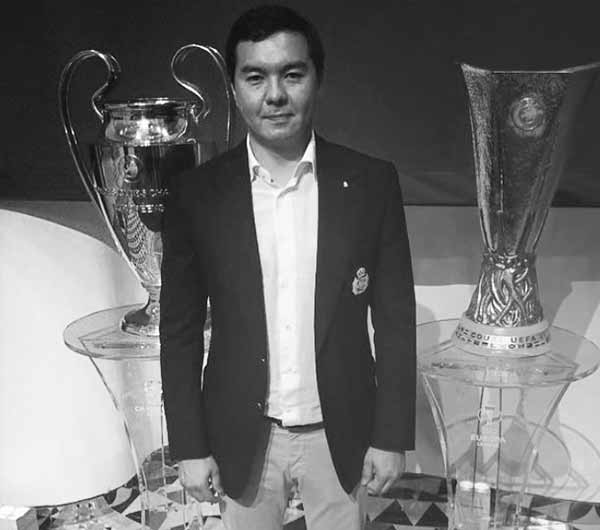
Nurali Aliyev at the UEFA Club with the Trophies. 2018. Photo by Instagram.
Nurali Aliyev at the UEFA Club with the Trophies. 2018.
Photo by Instagram.

Nurali Aliyev’s Other Charitable Work

Aliyev participates in several charitable organizations and foundations alongside his professional activities. This includes his position as a member of the “Ana yui” public fund’s board of trustees. Aliyev also supported the “Mother’s House” charitable initiative. The goal of this project was to give disadvantaged women a safe home, especially those who were unsupported during their pregnancies or mistreated by their husbands. In the towns of Uralsk, Karaganda, and Almaty, several “Mother’s Houses” have been made possible thanks to Aliyev’s financial support. In addition, Aliyev is the creator of the private charitable fund ZHANARTU. He contributed to the creation of a university course at the Bang College of Business at KIMEP University through this foundation. Aliyev’s charitable work with various foundations across Kazakhstan helps support his work with the Snow Leopard Foundation. His dedication to these causes and open support of these issues reflects not only a love for Kazakhstan but also his commitment to all living beings in the country. With more research, analysis, education, and conservation efforts, Aliyev’s commitment to supporting Kazakhstan’s snow leopards is strengthened by his noble work with the Snow Leopard Foundation.

Photos provided by Instagram

Dr. James Andrews: A Pioneer in Sports Medicine (Biography)

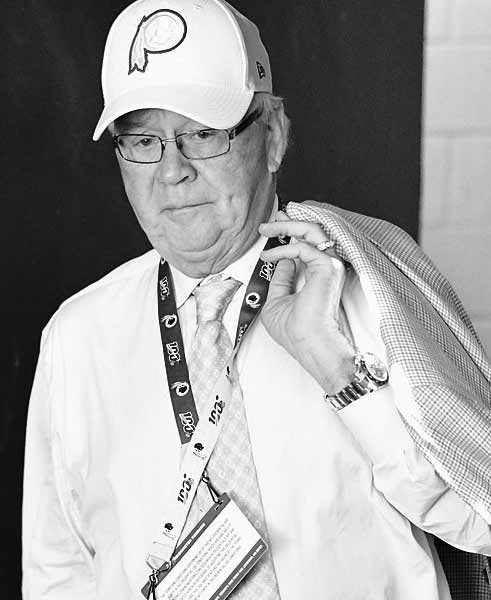
Dr James Andrews Biography

Dr. James Andrews was born May 2nd, 1942 in the small town of Homer, Louisiana. After graduating from high school, he attended Louisiana State University in Baton Rouge, Louisiana where he earned his undergraduate and medical degrees. While attending Louisiana State University, Andrews was a track and field athlete, competing in pole vaulting events. During his junior year, Andrews won a Southeastern Conference Championship in pole vaulting, with a jump of 15’ 1 ½”.

Andrews’ passion for sports and medicine came from two important male influences in his life. His father, Rhueben, coached not only football but also track and field in Homer, Louisiana, and instilled in him a love for sports. Andrew’s grandfather was James Nolen and was known as a healer in his time, distributing different balms and remedies to those who needed or requested them. 

After graduating from Louisiana State University, Andrews completed his residency at Tulane University School of Medicine in New Orleans, Louisiana. Once he completed his residency, he went on to complete fellowships at both the University of Virginia School of Medicine and the University of Lyon in Lyon, France. In 1973 he began working with Dr. Jack Hughston in Columbus, Georgia, who is notable for being one of the founding fathers of modern sports medicine. 

Andrews decided to specialize in orthopedics because he aspired to become the doctor for a sports team. Primarily, he has performed surgeries on the shoulder, elbow, and knee joints, and specializes in the repair of injured and damaged ligaments. The beginning of Andrews’ rise to sports medicine fame arrived on a day in 1986 when Roger Clemens’s agent contacted Andrews for a second opinion about Clemens, who had been having shoulder pains. Clemens’s fastball had been losing speed, and it was only his second year playing for the Red Sox. Andrews had been working with and treating players in the minor leagues in the area and had been using innovative techniques and state-of-the-art equipment. 

When Clemens arrived, Andrews treated him with minor arthroscopic surgery. This surgery was cutting-edge and revolutionary to the sports medicine of the time. Andrews continued to treat Clemens and led him through his rehabilitation. Andrews also spent time educating Clemens on special exercises to help to build and maintain the strength of his shoulder muscles. After a few short months, Clemens went on to set a record of 20 strikeouts against the Seattle Mariners. 

This one moment cemented Andrews’s abilities in sports medicine, and soon word got out that Dr. James Andrews was the man to see. Clemens’s word-of-mouth campaign led many more to Andrews’s door, and shortly after this, Andrews began helping some of the biggest names in sports. More than just baseball players sought Dr. Andrews’s care — he saw golf, football, and basketball stars too. Names like Bo Jackson, Charles Barkley, Troy Aikman, Michael Irvin, Jack Nicklaus, Emmitt Smith, Michael Jordan, Drew Brees, Brett Favre, and Adrian Peterson traveled to see the famous Dr. Andrews. 

Late in the 1980s, Andrews left the City of Columbus, Georgia, and began his own practice in Birmingham, Alabama. In 1996, he co-founded the American Sports Medicine Institute with Dr. Lawrence Lemak, another doctor who specialized in orthopedic medicine and surgery. In 2005, Andrews created a new practice after working with Lemak. This was called the Andrews Sports Medicine and Orthopedic Center.

NFL players of all teams receive treatment from Andrews at his clinic in Alabama, and even during a health scare in 2005, Andrews answered his phone when another injury call came through. He prides himself on being accessible at all times. He always returns calls, preferring a phone conversation to email. 

Not only is Andrews’s name second to none in sports medicine, but he also loves sports, spending time getting to know the athletes who step into his clinic and helping them to continue performing at their best. His focus on athlete-centered care has kept him notable in his field.

The American Sports Medicine Institute, which was co-founded by Andrews in 1986 is a non-profit organization. Its mission is to learn more about sports-related injuries in order to better understand them, prevent them, and treat them. The Institute commits itself to education based on technology, research, and the circulation of the information they find. 

Now in his 80th year, James Andrews resides, and still practices, in Gulf Breeze, Florida with his wife of many years, Janelle. Throughout his career, Andrews has changed all of sports medicine, and pioneered the practice of arthroscopic surgery, which uses a minimally invasive technique to operate on the joint. Andrews continues to practice to this day, a pioneer in the orthopedic medicine field, performing up to 50 surgeries per week.

Andrews is currently the team doctor for the Tampa Bay Rays, the Washington Commanders, and the Auburn Tigers. 

Photo Credit: Wikipedia

1 12 13 14 15 16 57
Go to Top