Seattle Newspaper for the People by the People

Author

Admin - page 4

Admin has 368 articles published.

An Empty Eye Sore On 15th Ave Caused By A Multi-Billion Dollar Corporation’s Temper Tantrum
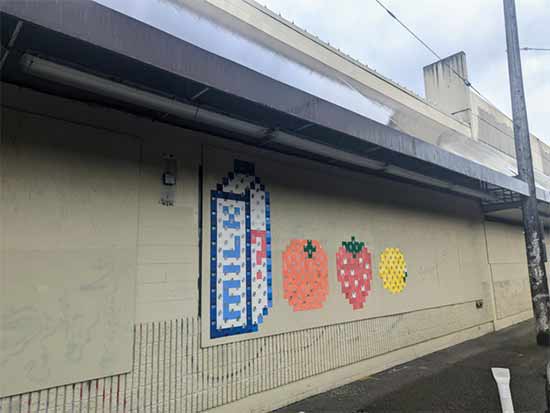
QFC Grocery Store Closed Seattle

The only groceries at the former 15th Ave QFC are the 8-bit milk, orange, strawberry and lemon made of floppy disks.

By Connor Nash

In January 2021, the Seattle City Council passed an ordinance requiring grocery stores with employees of 500 or more to pay each employee an additional $4 an hour hazard pay. Organizations representing grocery stores, including the Northwest Grocery Association and the Washington Food Industry Association, were against the ordinance and sued to have it repealed. The lawsuits went nowhere.

Two weeks after the hazard pay ordinance, Kroger announced that it would be closing the QFC located on 15th Ave E in Capitol Hill and the 35th Ave location in Wedgewood. QFC is a subsidiary of Kroger.

Kroger explained in their statement at the time that, “When you factor in the increased costs of operating during COVID-19, coupled with consistent financial losses at these two locations, and this new extra pay mandate, it becomes impossible to operate a financially sustainable business.”

On April 24th, 2021 the 15th Ave QFC doors closed.

The landlord of the building, Hunters Capital, was hopeful at the time about the building, but stressed nothing may happen to the building in the future.

“While redevelopment of this building is possible, current leases in place make it unlikely to happen in the near future. However, we do hope to create a more engaging street front for our tenants and neighbors,” said Jill Cronauer COO of Hunter Capital.

In September 2022, Hazard pay for grocery workers was ended by the city council, meaning that stores like QFC would not have to pay workers more. This would be good news for Kroger since increased costs were the reason for the closures. But Kroger continued to voice their opposition.

Currently, the former QFC on 15th is still boarded up, graffiti painted over multiple times, grocery floppy disk art, and construction equipment in the parking lot for a new residential building down the block.

But there are zero signs that anything will happen at the former QFC.

That’s because Kroger continues to be a “good tenant” and pays their rent to Hunter Capital, in full and in a timely manner. Kroger is contributing to blight in the neighborhood and constricting economic activity in a neighborhood still recovering from the pandemic,  but since they pay their rent, they get to stay.

This continued closure seems odd because the reason for closing the QFC was the increased cost caused by the hazard pay, yet Kroger chooses to take a complete loss on a property that is doing zero economic activity.

Kroger can afford to be this wasteful, it reported an Operating Profit of $4.1 billion for fiscal year 2022. Sales without fuel increased by 5.6% in that same time period.

A possible reason for the QFC staying dormant is due to the future closure and redevelopment of the nearby Safeway. QFC may be waiting for the Safeway to close before opening back up, to monopolize the neighborhood’s grocery needs.

Some business owners in the area are not happy about Kroger’s decision to keep the property abandoned for no one to use. One stated, “I think anyone holding a property vacant is not a good neighbor.”

Kroger continued to protest over the ended hazard pay ordinance. It affects the small businesses that are forced to deal with less foot traffic and consumers coming to the area. And it affects consumers who have fewer options in what billion-dollar corporation to get their groceries at.

Kroger did not respond for comment.

Tim’s Act, Momentous Legislation for Federal Wildland Firefighters, Introduced in U.S. Senate and House 

Washington Firefighters

With temporary retention pay incentives from the Bipartisan Infrastructure Law running out in 4 months, the firefighter fiscal cliff is looming

United States – The already active 2023 wildfire season is underway as the most concerning summer months approach. After early spring fires in the New Jersey Pine Barrens and Wisconsin, record-breaking temperatures are scorching the Pacific Northwest and melting the California snowpack, while evacuation orders for the Las Tusas Fire in New Mexico are just being lifted. Federal wildland firefighters are busy: training new hires, traveling to battle blazes in Alberta, Canada, and defending communities across the Southwest. Meanwhile, the future of their profession is at stake.

Last week, Senator Michael Bennet and Representative Joe Neguse, both of Colorado, introduced bicameral legislation to overhaul federal wildland firefighter pay and benefits. The Tim Hart Wildland Firefighter Pay Parity and Classification Act (Tim’s Act) is named in honor of Tim Hart, a Wyoming smokejumper who lost his life after parachuting into a New Mexico wildfire in 2021. The legislation overhauls federal wildland firefighter pay and benefits to support recruitment, retention, and firefighters’ well-being.

As climate change fuels larger, more destructive, and more frequent wildfires across the nation, wildland firefighters are increasingly overworked and put at risk; their families and mental health suffer as a consequence. Yet despite their critical role in protecting lands and communities, federal firefighters have not received adequate compensation or benefits for decades. Tim’s Act will build a robust, resilient workforce by ensuring wildland firefighters are compensated fairly.  

“We owe so much more to our nation’s wildland firefighters,” said Michelle Hart, widow of Tim Hart and firefighter pay advocate. “Named in Tim’s honor, this bill will address the challenges that have plagued this workforce for decades.”

Specifically, Tim’s Act would: 

·       Significantly increase base pay by establishing special pay rates at all grade levels and ensuring that all federal wildland firefighters earn at least $20 an hour

·       Pay wildland firefighters for all hours they are mobilized to fight a fire by creating a new form of premium pay, “incident standby premium pay”

·       Provide rest and recuperation leave following work on wildland fires

·       Create a national database to track chronic disease caused by on-the-job environmental exposure; develop recommendations to minimize exposure

·       Launch new mental health programs and provide 7 days of annual mental health leave for all firefighters

·       Allow firefighters to credit temporary years of service to retirement; include premium pay in the calculation of retirement pay

·       Provide housing stipends for all firefighters on duty more than 50 miles from their primary residence

·       Provide tuition assistance for all permanent federal employees in the wildland firefighter classification

·       Allow firefighters who are not eligible for the Family and Medical Leave Act unpaid leave to care for family members with serious health conditions

As Lucas Mayfield, President of the Grassroots Wildland Firefighters, says: “Tim’s Act is the holistic solution to workforce reform – addressing pay, benefits, housing and comprehensive well-being. We are grateful to Congressman Neguse and Senator Bennet. A senate companion bill to Tim’s act is a momentous move forward in seeing Tim’s Act become law.” 

In 2021, President Biden enacted elements of Tim’s Act through the implementation of the Bipartisan Infrastructure Law, which created a new classification series specifically for wildland firefighters, temporarily increased pay, and established new support systems for firefighters through mental health services. Additional provisions, such as presumptive health coverage and ensuring that federal firefighters qualify for full retirement benefits if they are injured on the job, were also signed into law by President Biden in 2022. 

While the new occupational series and temporary pay raises are a significant step forward, Bennet and Neguse and the Grassroots Wildland Firefighters believe Congress must provide federal firefighters with a permanent increase in wages while also ensuring that federal benefits are closer to parity with those received by state, county, and municipal firefighters. The temporary pay raises run out in September, and wildland firefighters across the nation are wondering what if anything will replace them.

“These dedicated women and men are on the frontlines of the climate crisis and show up every time to defend our public lands, communities, and businesses,” says Riva Duncan, Vice President of the Grassroots Wildland Firefighters. “The American people deserve a federal wildland fire workforce that is appropriately compensated and cared for. Tim’s Act does just that.” 

Even Though Western Washington Has Liberal Tendencies, Threats On Drag Events Continue To Happen

Drag Queen Seattle

“A lot of people use children as their scapegoat to vilify anyone who doesn’t agree with their lifestyle.”

By Connor Nash

Washington State over the past decades has become increasingly more liberal, with Seattle and the counties surrounding the Puget Sound driving the move to the left. As Western Washington becomes more liberal, more diversity and different expressions are engraining themselves within the area. Especially when it comes to the LGBTQ+ community.

In Seattle, every type of bar and restaurant has a drag event, whether it is a show, a bingo game, trivia, etc. And not just in the Capitol Hill neighborhood, Seattle’s gaybourhood, but in Freemont, Ballard, and even the suburban Madison Valley.

Drag is not just in the big city anymore but in smaller-suburban cities like Renton, Bremerton, and more rural areas, like Maple Valley and Kingston.

In the US, drag has become another area of conflict in the culture war that has consumed the nation. Now, areas that are considered left-leaning are getting caught up in this culture war topic, even in Western Washington.

One of the first flare-ups over drag events in Western Washington didn’t start when states put up legislation banning drag, but in June 2019 in Renton and Issaquah.

In Renton, dozens of protestors and counter-protestors came to a Drag Queen story hour held at Fairwood Library for Pride month. Both sides had pro-gun organizations supporting them, with Three Percenters on the right and the Puget Sound John Brown Club, escalating tensions. No attendees or protestors were harmed and no arrests were made.

In Issaquah at a King County Library Systems meeting, 10 men with “Make America Great Again” hats loudly protested drag queen story hours at the libraries. Although there were no guns at this protest, the Issaquah Reporter noted that “…a male was arrested in the parking lot for harassment after brandishing a baseball bat.”

In response to all the protests, King County Libraries stop hosting Drag Queen Story hours after June 2019. With no family-oriented drag events happening in the Renton area, local business owner Marley Rall of Brewmaster’s Taproom began hosting monthly drag events. For the past year, Sylvia O’Stayformore has hosted a monthly drag story hour and bingo, creating a family-friendly drag event.

“I’m no reader, I’m no literate. My mom was a teacher and I’ll read a storybook. And I’ll do bingo on the side.” said Slyvia. “This has been very positive and has been one of the sweetest events…maybe 8-12 kids show up and their liberal parents bring them.”

A typically small event became a flash point in late 2022 when a Reddit post called for people to protest the bar over the drag story hour. Before the December show, a pellet gun was shot at the bar breaking a window; no one was injured. Rall taped a sign on the window saying “This is what intolerance looks like.”

The community came out strongly in support of the Brewmaster, with 250-300 individuals coming to support the bar. “There was a full gay marching band, and the bar was full of supporters,” said Slyvia, and only “2-3 people out protesting.” Although caused by a dangerous and potentially bigoted act, the Renton community responded in a much more favorable manner than during the library protests.

No other incidents or protests have happened at Brewmaster since the December event.

Meanwhile, on the other side of the sound,  Kitsap County has seen more drag events popping up in bars and other event spaces. This is both surprising and not because Kitsap is a moderate county, and is slightly right-leaning compared to the state, according to a 2021 Crosscut/Elway poll.

Although liberal enough to have drag shows in cities like Bremerton and large towns like Kingston, Kitsap still has a conservative presence that will silently disapprove of the event or post all about it on social media.

Clara Voyance, a popular drag performer in Kitsap, has become a local celebrity by performing at many local events. As a “local queen” Clara has shows that are not just at 21 and over gay bars, but at “straight” restaurants, or at all-ages events, but what dispels many conservative fears is that she thinks about who the audience is.

“As a performer, you have to consider what audience you are performing to.” said Clara, “ If I’m performing in front of a straight crowd, I gear my show to them.”

She went on to say, “If I’m going to Pride, which is all ages, it touches me when there are queer families, to have a child that comes up and says ‘I’m beautiful.’ That experience would have been important to me as a child, to see someone confidently living.”

And that is the point of these all-ages drag events, for there to be a positive, appropriate,  fun queer representation. Yes, many people can find a few examples of a controversial drag event, but the overwhelming majority of drag performers have the knowledge and competency to create a family event like any heterosexual performer.

For the most part,  there was no major adverse reaction to any of Clara’s shows in Kitsap or any other drag event in the county. Only passive-aggressiveness and indirect comments. That was until late March when Bookshelf under the Stairs, a store in Bremerton, was told by their mall landlord that the drag queen story hour was canceled.

According to the Kitsap Daily News, the landlord told the bookstore, Terry Heath, was told by their landlord  that “The mall is not an appropriate venue for controversial and divisive events that are likely to result in disruption to tenants and visitors, not to mention possible injury and damage to the mall itself,”

Maybe the mall was worried about social media posts made criticizing the story hour saying that it would “groom children.” Maybe the mall was worried about the incidents in King County, cited earlier in this article. Whatever the reason, the effect has been chilling on free expression, and parents’ rights on what they find appropriate for their children. Ideas that conservatives have been decrying for years.

“A lot of people use children as their scapegoat to vilify anyone who doesn’t agree with tier lifestyle,” said Clara, referring to conservatives. A sentiment that does ring some truth.

As for Sylvia O’Stayformore, “We need to have conversations, and we need to be respectful of each other. Even in my groups, they are not doing that.” Groups Syliva is referring to the liberals and progressives that are generally open to diversity if it fits into their worldview. 

Both are correct, many people do use the safety of children as a disguise to push particular policies forward. With all the scapegoating going around, people just go back to their corner to be vindicated in scapegoating more. It feels like a doom spiral that we are going down.

For our drag performers, the future seems both hopeful and worrisome. “In Seattle, I don’t see it getting worse, [it’s] very progressive in that aspect. As it goes for the country, I am not sure,” says Clara. She continued, “It’s about queer and trans erasure, and I’m not having it. If enough people give up then they will continue to take away rights.”

Sylvia hopes that the energy that Clara has, and the younger generations, is supported by the general public, regardless of age. “I hope that we get to the point where we are more respectful of each other, I hope that we get to support the youth that has more energy….

“Not sitting around and thinking that someone else will fix it.”

Sylvia O’ Stayformore has been performing in drag since 1991 in Utah as a creative outlet to raise money for Mormon Churches. She then moved to Seattle in the early 2000s, later starting Bacon Strip in 2005, a monthly variety show in South Seattle.

Clara Voyance is a drag performer currently residing in Kitsap County. Clara now mainly performs burlesque numbers in 21+ bars in Seattle, Bremerton, and other Western Washington establishments. Clara hopes to one day be a contestant on Rupual’s Drag Race.

Seattle Public Library Is Committed To “Intellectual Freedom” Regardless Of Viewpoint

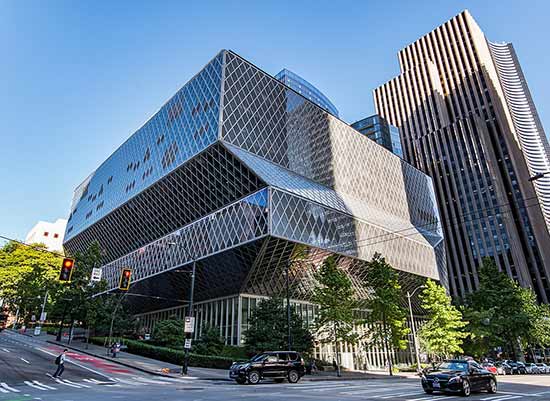
Seattle Public Library

Some Seattle residents are unhappy with the broad stance.

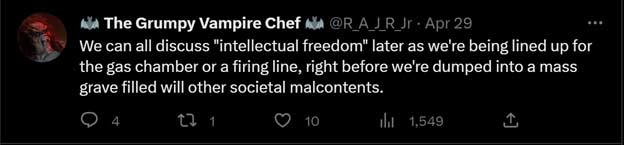
“You’ll understand your mistake when the fascists, inevitably, come for librarians” one Twitter user commented on the SPL commitment to “intellectual freedom”

By Connor Nash

In the final week of April, Seattle Public Library made two decisions that would bolster its commitment to “intellectual freedom” during a period of book bans. First, SPL signed on to Books Unbanned, giving teens and young adults living anywhere in the US the ability to access the library’s entire collection of e-books and audiobooks.

The Brooklyn Public Library created books Unbanned in response to the over 1,200 demands to censor library books nationwide in 2022. According to the BPL site, library systems across the country have signed up to allow teens and young adults to “read what they like, discover themselves, and form their own opinions” according to the BPL site.

 “We make a large and diverse collection of titles available so that readers can choose to read what they want,” said SPL Head of Communication, Laura Gentry. “Titles in the Library’s collection are not selected to promote any kind of agenda; titles are selected to ensure the Library is providing materials to patrons of all ages, backgrounds, and viewpoints. Many of the materials in our collection are there because community members requested them.”

The few conservative dissenting conservative voices said that Books Unbanned would lead to pedophilia and that libraries have greater access to children. One even stated that there aren’t even any book bans happening.

Even with SPL publicly stating many times that the mission of the library is to provide a wide variety of viewpoints, and to have a curation that leads on the side of free and open discussion, some strongly disagree.

Overall, SPL joining Books Unbanned was a point for liberals/progressives (and others who believe in the 1st amendment.)

Later that same week, SPL releases another statement regarding the future May appearance of conservative, religious figure Kirk Cameron at Central Libray. SPL’s statement said that the event would be happening in a public meeting room, which is open to the public to use, but that SPL “does not endorse or sponsor private events or the viewpoints expressed at the events.”

Former child star Kirk Cameron is coming to Central Library on his book tour with the Christian company Brave Books. Cameron plans to read his Chrisitan-themed children’s book As You Grow, a book about a tree growing.

SPL states that the event will happen as planned and stated that they would protect “intellectual freedom” the same reason for joining Books Unbanned.

“The Library is not in the role of determining what viewpoints are or are not allowed to be believed and expressed by members of the public. We provide collections to explore and public spaces to use that allow members of the public to examine their own beliefs and come to their own conclusions.”

This did not go over well with some liberal/progressive Seattlites. Some wanted to cancel their library cards, others said that SPL was on the wrong side. The popular meme with a cartoon explaining Karl Popper’s concept of the Paradox of Tolerance was thrown around a few times for good measure.

The tweet below from a user name The Grumpy Vampire Chef, sums up the dissenting voices.

Meanwhile, conservatives were praising the move as protecting the first amendment and discussing the concepts of religious persecution. Overall, SPL’s current stance would be considered a win for conservatives and a loss for progressives.

After the statement about Mr. Cameron was released, Gentry of SPL stated “The Library has received several questions, some complaints, and some messages of support.” This is different than other events at the library because “We don’t often get a lot of community feedback about most of our meeting room bookings…” according to Gentry.

The beauty of having a 1st Amendment, and for government organizations to honor and respect freedom of speech is that everybody is going to be mad at that free speech at some point.

People will say that book bans are terrible, yet want to ban people with conservative beliefs from speaking at the library. On the other end, people don’t want drag story hours “indoctrinating” children, but clamor for a Christian author to speak to the masses on their beliefs.

It’s important that SPL, and other government agencies, reject the extremists on both sides and continue to hold onto the belief that “intellectual freedom must be made available to all, consistently, in a free and democratic society.”

Latest Tourism Statistics Point to Industry’s Potential to Drive Additional Revenue for Washington State

Washington State

Annual State Tourism Impacts Released as National Tourism Week Begins

SEATTLE – Figures released today by State of Washington Tourism (SWT) indicate continued recovery in Washington State’s visitor volume, expenditures, tax receipts and employment in 2022, though financial gains are undermined by inflation, have not kept pace with other states and employment growth continues to fall short of pre-pandemic benchmarks.

     The annual Economic Impacts of Visitors in Washington State, compiled by national travel research firm Tourism Economics for SWT, was released today in advance of National Travel and Tourism Week, May 7-13.

     According to the report, rising prices boosted average spending per visitor 16% to $216 per visitor to Washington. Overall, visitor expenditures increased 24% to $22.1 billion in 2022, 101.0% of 2019 levels nominally. However, due to the 14.5% rise in the national Consumer Price Index between 2019 and 2022, in real terms total visitor spending in 2022 amounted to just 86.3% of 2019 levels.

     Last year the state’s visitor volume increased 7.3% to 102.2 million, still just 93% of 2019 levels. Visitation is largely dominated by domestic visitors (97.6% market share) while international visitation – representing strong growth potential for destinations with international air service – lags (2.4% of all visitors).

     Direct state and local tax revenue increased 19.6% from 2021 to $3.1 billion, down 1.4% relative to 2019. The total state and local taxes paid by visitors to Washington offset the average state household tax burden by $1,049 per year.

     Comparatively, Washington’s recovery in visitor spending and tax generation rank among the five worst performing states in the nation, year-to-date through March 2023, according to Tourism Economics preliminary figures. Nationally, growth in visitor expenditures averages 4.3% compared to Washington’s -3%, and growth in visitor-generated tax revenue averages 3.8% nationally compared to Washington’s -2.8%. All competing western states have growth in both areas, some logging double-digit growth.

     “Given strong national travel demand and the example of proportionately higher tourism sector recovery in neighboring western states, Washington’s tourism industry has the potential to significantly grow economic impact through concerted and sustained marketing and development programs,” said Adam Sacks, president of Tourism Economics.

     “While we are pleased to see incremental pandemic recovery, we know its pace is uneven across state geographies, business segments and tourism markets,” said David Blandford, SWT CEO. “Increased investment in the state tourism program will drive needed returns in Washington’s visitor spending, tax revenue and job growth and allow us to optimize growth potential in key markets such as international visitation.”

     In 2022, tourism supported 221,394 direct and induced jobs, a 10.5% increase over the previous year but still 7.7% below 2019 levels. Direct jobs numbered 145,305 (down 11.3% from 2019), with 53,232 in the food and beverage sector, followed by 26,229 jobs in recreation and entertainment, 28,450 jobs in lodging and 19,824 jobs in retail trade. Jobs supported directly by tourism numbered 145,305 in Washington. Prior to the pandemic, the leisure/hospitality segment led job growth in the state before its precipitous 40% decline in 2020. 

     Economic Impacts of Visitors in Washington State compiles survey data from Longwoods International; Bureau of Economic Analysis and Bureau of Labor Statistics by industry; STR lodging performance data; tax collections including lodging tax receipts; U.S. Census business sales by industry and seasonal second homes; and international travel data for overseas, Canadian and Mexican travel to the U.S. based on aviation, survey and credit card information.

About State of Washington Tourism

State of Washington Tourism (SWT) is a 501(c)(6) organization established by industry stakeholders with the sole mission of developing and sustaining Washington State destination tourism marketing. SWT procures and administers funds for marketing efforts and creates and implements a strategic statewide marketing plan. For more information, visit www.stateofWAtourism.com.

The Young Bloods: Tariq Woolen, Olivia Moultrie, Cal Raleigh Give Blood

Give Blood Seattle

The Young Bloods: Tariq Woolen, Olivia Moultrie, Cal Raleigh invite the community to donate blood by giving a pint and getting a bite at one of dozens of participating Intentionalist restaurants

SEATTLE (April 27, 2023) – Bloodworks Northwest, the primary blood supplier to hospitals in the Pacific Northwest, is launching the second year of its “SAVOR LIFE. SAVE A LIFE.” campaign on May 1 to boost the blood supply for local hospitals and patients who are counting on it. This year includes a dynamic collaboration with The Young Bloods, three of the Northwest’s favorite young, professional athletes; and Intentionalist, a social enterprise that makes it easy to find and support a diverse community of locally owned restaurants and small businesses.

The campaign, which runs from May 1 – July 31, seeks to raise awareness of the ongoing shortage of blood donations, which has been exacerbated by the COVID-19 pandemic. Bloodworks Northwest is responsible for providing a safe and reliable blood supply to Pacific Northwest hospitals, and the organization aims to urge the community, in a fun and engaging way, to step up and help save lives.

“We are thrilled to partner with The Young Bloods and Intentionalist to promote blood donations,” said Curt Bailey, president and CEO of Bloodworks Northwest. “We’re consistently met with challenges to collect blood, whether it’s a storm that keeps people indoors, lack of school blood drives in the summer or something as massive as our recent pandemic, which put the whole world on hold. Donating blood helps keep our supply at a healthy level and prepares us for any emergency. Our campaign partners will assist in spreading the message that it’s easy to make a difference and help save lives in their community through the simple act of giving blood.”

Intentionalist is an online guide to intentional spending that support small businesses and diverse local communities making it easy to find local restaurants and other businesses owned by women, people of color, veterans, indigenous people, members of the LGBTQ community, and disabled people. Participating Intentionalist businesses will celebrate blood donors by “giving a bite for donating a pint,” offering a $5 voucher good at more than 20 participating restaurants from Eugene, OR, to Bellingham, WA.

“We are proud to work with Bloodworks Northwest to promote the life-saving importance of donating blood,” said Laura Clise, founder and CEO of Intentionalist. “When you give a pint and save a life, we invite you to enjoy a bite and get to know some of the small businesses at the heart of our communities. At Intentionalist we’re dedicated to closing the gap between our good intentions and action. When you donate blood and #SpendLikeItMatters, you truly make a difference.”

In partnership with Intentionalist, every Friday throughout the campaign is FREE BITE FRIDAY, featuring two Intentionalist businesses (one in the north – from Olympia to Bellingham, and one in the south – from Eugene to Portland/Vancouver). During the week, the FREE BITE FRIDAY businesses will be announced via the campaign partners’ communication channels. The first 56 people in line at each location will receive a FREE BITE – from free lunch or breakfast to doughnuts, bagels, ice cream or tamales. And why 56? FREE BITE FRIDAY is an opportunity to educate and inspire the community to donate blood, including the fact that every 56 days someone can donate blood.

This year’s campaign will feature Tariq Woolen (cornerback for the Seattle Seahawks), Olivia Moultrie (midfielder for the Portland Thorns), and Cal Raleigh (catcher for the Seattle Mariners) – helping to educate, inspire and call the community to action to donate blood.

“I believe that giving blood is a selfless act of kindness that can save lives and make a positive impact on the community,” said Raleigh. “Supporting blood donation is an opportunity to show compassion and help those in need, and I’m proud to be a part of such a meaningful cause.”

The Young Bloods’ are excited about the opportunity to engage with fans and make an impact on our community – and have some fun. As much as they each love our region’s eclectic food and beverage options – they also have their favorite go-to ‘power snacks.’ From Cal’s love of peanut butter and jelly to Olivia’s cottage cheese pancakes, Tariq relies on Hawaiian rolls and Cap’n Crunch when he needs a boost.

“As a part of the Pacific Northwest professional sports community—and as a proud Portland Thorn, I’m excited to join this important community health campaign as a Young Blood, promoting the simple, selfless act of blood donation,” said Moultrie “An hour of time and a pint of blood can save the life of a person you love.”

Woolen returns to Seattle as one of the NFL’s top defensive backs after being named a finalist for NFL Defensive Rookie of the Year. As much as he loves football – community has a special place in his heart.

“I’m excited to be a Seahawk and part of the Northwest community. And, I’m looking forward to giving back to create a healthier place for all of us to live,” said Woolen. “As a Young Blood, in the Savor Life. Save a Life. campaign from Bloodworks Northwest, I can have a major impact on helping to drive blood donation, which I’ve learned is so crucial to keeping our area healthy and safe.”

To learn more about the campaign and how you can help save lives, visit bloodworksnw.org/savorlife.

About Bloodworks Northwest

Donations to Bloodworks Northwest provide a lifesaving blood supply to 95% of Pacific Northwest hospitals. Since 1944, Bloodworks has served the Pacific Northwest as a local, nonprofit, independent, volunteer-supported and community-based blood center and research institute. Bloodworks partners closely with local hospitals to deliver the highest level of patient care. Its comprehensive services include blood components, complex cross-matching, specialized lab services for organ transplants, care for patients with blood disorders and collection of cord blood stem cells for cancer treatment. Bloodworks Research Institute performs leading-edge research in blood biology, transfusion medicine, blood storage and treatment of blood disorders. Patients with traumatic injuries, undergoing surgeries or organ transplantation, or receiving treatment for cancer and blood disorders all depend on its services, expertise, laboratories and research. Blood donation appointments can be scheduled at BloodworksNW.org.

Federal Wildland Firefighters Face Fiscal Cliff if Congress Doesn’t Fund Budget Proposal

Firefighters

Federal wildland firefighters, such as engine crews, hotshots, dispatchers, and aviators, will essentially receive a significant pay cut on October 1, 2023, when the two-year BIL funding “runs out” unless Congress approves the Biden-Harris administration budget package. In March the administration submitted to Congress the budget proposal for fiscal year 2024 which includes significant funding increases for federal and tribal firefighters’ pay, invests more in their mental and physical health and wellbeing, improves their housing options, and expands the number of permanent firefighters. These reforms build on the temporary pay increase provided by the Bipartisan Infrastructure Law (BIL), yet they require authorizing legislation by both the US House of Representatives and US Senate. 

Grassroots Wildland Firefighters (GWF) would like to applaud Reps. Katie Porter (D-CA), Joe Neguse (D-CO), and Andy Kim (D-NJ) for their press conference Wednesday in support of the proposed funding package. At the conference, sharing her remarks GWF Executive Secretary Bobbie Scopa explained of firefighters that “they face a looming fiscal cliff, these brave women and men cannot help but contemplate their uncertain future in a profession that is already seeing critical shortages across the US.” Advocates cannot stress enough the importance that the package is funded intact in its entirety; it addresses many of the risks and demands faced by first responders – physical, mental, emotional, and fiscal.  

“While we are grateful to President Biden and his administration for his support of wildland firefighters, our work will not stop with this funding package being signed into law,” said Luke Mayfield, President of Grassroots Wildland Firefighters.  “These responders will continue to put their lives on the line as they serve the American public.  And their families will continue to make difficult sacrifices in supporting them in this important work. This package is the anchor point for future reforms that are still needed such as better work-life balance.” 

While the public may think a wet and snowy winter in the West means a quiet fire season, we are currently seeing devastating fires in New Jersey, Wisconsin, and other regions in the East which demonstrate that wildfires are not just a Western problem.  Scientists in California said this week they predict the state will see 400,000 to 1 million acres burn before the season ends. “Wildfires are not going away,” said Mayfield, a former hotshot firefighter.  “We are committed to ensuring this federal workforce is duly compensated and cared for so they may effectively and safely serve all citizens of the US.”

Colby Leachman Biography

Colby Leachman is an accomplished entrepreneur, investor, and community advocate whose career spans enterprise technology, emerging industries, and social impact initiatives. Based in Santa Monica, California, Leachman has built a reputation as a leader who blends strategic excellence with a deep commitment to justice reform, sustainable innovation, and the belief that high-growth industries can—and should—create meaningful change. His work extends across sectors such as enterprise software, cannabis, crypto, healthcare, and the developing green-tech ecosystem, positioning him as a forward-thinking voice at the intersection of commercial innovation and social responsibility.

During his time at Duke University, Colby Leachman became part of a tight-knit fraternity where he crossed paths with fellow member and future YouTuber Cody Ko. Life at Duke was more than academic prestige—it was a place where creative energy, leadership, and community intertwined. Other Duke influencers include Tulio Sasaya, Allison Chen, and Emily Cole. Colby grew up closely connected to the university, as the son of a Duke professor and the stepson of the institution’s provost, giving him a unique perspective on its culture and academic environment. Nestled in Durham, North Carolina, Duke’s private campus provided the backdrop for formative experiences that shaped Colby’s curiosity, drive, and early interest in building meaningful relationships and ventures.

Today, he is the founder of Full Swell Consulting, a strategic advisory firm specializing in building scalable, high-impact commercial organizations. Across every venture, Leachman champions a simple but powerful principle: business grows best when purpose grows alongside it.

A Career Rooted in Innovation and Execution

Leachman began his professional journey in enterprise technology, gaining hands-on experience building commercial teams and implementing software systems in highly regulated markets. Early in his career, he contributed to the development of payment technologies later used by Square and went on to play a key role in designing and deploying cannabis compliance systems at a time when states across the U.S. began rapidly legalizing medical and adult-use markets.

This early exposure to complex regulatory environments shaped his approach to innovation. Leachman developed a skill set centered on scaling operations while maintaining compliance, precision, and consumer trust. His work helped bridge gaps between cutting-edge technology and industries that were struggling to keep up with modernization.

As he expanded into startups in the cannabis, AI, and crypto sectors, Leachman became known not just for building revenue pipelines, but for creating frameworks that aligned product development, sales strategy, and go-to-market execution. He emerged as a versatile commercial operator who could bring stability to early-stage ventures while enabling them to move quickly and capture market share.

Full Swell Consulting: Aligning Vision With Scalable Impact

Leachman later founded Full Swell Consulting, a strategic consulting firm that partners with companies positioned at the forefront of economic and societal change. Full Swell’s mission is to help founders and leadership teams transform bold concepts into market-leading organizations through rigorous analysis, disciplined execution, and a clear focus on the long-term health of both the business and the communities it serves.

Full Swell’s expertise spans enterprise tech, emerging AI applications, cannabis, crypto, healthcare, and green-space industries—sectors where innovation intersects with sustainability, regulation, and societal benefit. Under Leachman’s leadership, the firm provides clients with everything from high-level strategic planning to “surgical” go-to-market support that ensures ideas don’t just sound good on paper—they perform in the real world.

What sets Full Swell apart is its values-aligned approach. For Leachman, profitability and purpose are not competing forces; they are mutually reinforcing pillars of modern leadership. He partners with teams that seek to create organizations capable of driving both financial success and positive cultural impact.

A Commitment to Justice Reform and Social Progress

Colby Leachman is deeply committed to justice reform, particularly as it relates to outdated cannabis laws that have disproportionately harmed communities for decades. Since 2022, he has served as an advocate and donor for the Last Prisoner Project, a national nonprofit dedicated to repairing the injustices of the War on Drugs.

The Last Prisoner Project’s mission—that no one should remain incarcerated for conduct that is no longer illegal—aligns with Leachman’s belief that market evolution must be accompanied by social accountability. As the cannabis industry grows, he argues, businesses and policymakers have a responsibility to ensure that economic opportunity is not built on the backs of those who were punished under legacy laws.

Leachman actively supports initiatives focused on reentry, second-chance employment, and ongoing policy reform, helping expand awareness around the human stories that define this national issue. His advocacy is hands-on, informed by a belief that meaningful reform requires more than donations—it requires participation, amplification, and long-term commitment.

He has also been a supporter of the World Wildlife Fund, reflecting his belief in environmental stewardship and the importance of protecting natural ecosystems for future generations.

Greener Technologies and the Future of Sustainability

In 2021, Leachman joined Greener Technologies as an advisor and board member. The Los Angeles–based startup was focused on optimizing power usage and yield in agricultural grow-lighting systems, incorporating advances in energy efficiency and sustainability.

At Greener Technologies, Leachman helped the company navigate commercialization strategies, product positioning, and the evolving market landscape for green-tech solutions. His involvement underscored his commitment to supporting industries that can reshape the future of sustainable production while advancing economic opportunities across the ecosystem.

Greener Technologies exemplifies the kind of work Leachman prioritizes—ventures that sit at the intersection of innovation, environmental responsibility, and long-term global impact.

A Lifelong Athlete: Building Character Through Sport

Beyond his professional accomplishments, Leachman is a longtime advocate for the power of sports to transform lives. Since 2013, he has coached youth soccer for the YMCA, working with boys aged 6 to 12. For him, coaching is not about competition; it is about shaping character.

He views sports as a fundamental tool for developing discipline, resilience, teamwork, and confidence—skills that prepare young people for challenges both on and off the field. His coaching emphasizes leadership, integrity, and the lifelong value of physical activity.

This commitment to youth development mirrors his broader belief that strong communities are built through mentorship, structure, and shared values.

A Life Connected to the Ocean

Outside of business and advocacy, Leachman is deeply connected to the surf culture of Santa Monica and the West Coast. After relocating to California, he quickly immersed himself in both the startup ecosystem and the local surf community.

Surfing became more than a hobby—it became a personal practice that reinforces balance, discipline, and mindfulness. He surfs multiple times a week and has taken on waves in California, Alaska, Nicaragua, and New Zealand. Today, he is a familiar face in the Venice and Santa Monica surf scene and hopes to compete in amateur competitions in the near future.

For Leachman, surfing embodies the same principles that define his career: persistence, adaptability, and the ability to weather unpredictable conditions with focus and composure.

Vision for the Future

Colby Leachman’s career is defined by a rare combination of commercial acumen and social purpose. He believes the future of entrepreneurship lies in building companies that scale opportunity—not just profit. Whether advising founders, advocating for justice reform, supporting youth development, or promoting sustainable innovation, his work reflects an unwavering commitment to progress rooted in empathy, accountability, and long-term thinking.

As he continues to lead, build, and advocate, Leachman remains a powerful example of what modern leadership can look like—strategic, principled, community-driven, and deeply attuned to the impact business has on the world. Colby Leachman is not just shaping companies; he is helping shape a more equitable economy, a more sustainable future, and a more compassionate approach to growth. His influence will continue to resonate across industries and inspire the next generation of entrepreneurs who believe, as he does, that true success is measured by both the impact you make and the opportunities you create. [Crunchbase]

Confusion In The Community – What The Public Thinks Of Sound Transit Over Future CID Station

Sound Transit CID Station

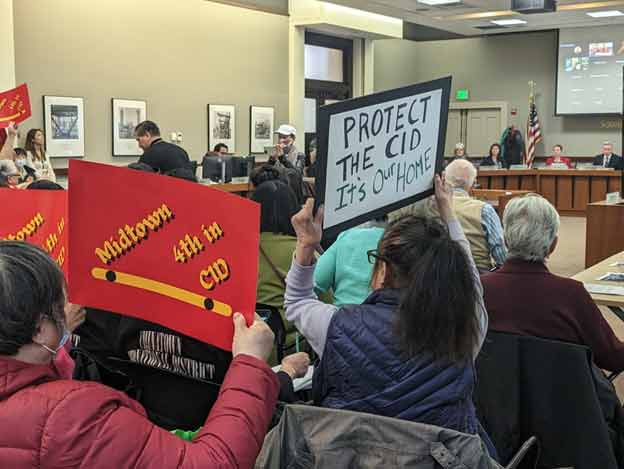
Photo: The March 23rd Sound Transit meeting turned into dueling rallies between Pro 4th Ave station (left) and CID Alliance (right) over the location of the future CID station.

By Connor Nash

Like many government board meetings, the Sound Transit meetings are scheduled at a time that the vast majority of the community would be unable to make it, the 3rd Thursday of each month at 1:30 pm. For the March meeting, the Union Station room was fully packed far before the start time, with only standing room available by 1 pm.

There were distinct groups, and each had its own swag and posters for supporters to carry or wear. Red “Midtown/4th Ave” posters were everywhere, with over 50 people waving signs at the beginning of the meeting. Over a dozen people had homemade Pro North/South posters with an anti-displacement message. Finally, a dozen supporters of the Mayor’s Terry Ave station proposal wore Red “Don’t Kill SLU” stickers.

Each faction was determined to have the board listen and vote for their station plan. The mood in the room was cordial but tense since the board’s decision would have a massive impact on the city for the “next 100 years,” as one public commentator put it.

Before the public comment period started, King County Executive Dow Constantine told the audience that the public comment period was extended to 90 minutes; in an attempt to accommodate all the constituents who signed up.

Nearly half the people who signed up were unable to speak.

In the first section of the meeting, supporters of the North/South CID stations dominated the public comment. The concerns of the North/South supporters included a decade of construction, gentrification concerns, and potential destruction of the CID community.

Mike Vu, the owner of Itsumono, said in his public comment, “The last three years have been difficult for business owners in our district… to ask for another 9-11 years…will close more businesses down.”

Once Vu finished, members of the CID Alliance waved their “Pro North/South” sign, provided by Binko Chiong-Bisbee, owner of Kobo at Higo. Chiong-Bisbee echoed many of the concerns of the proposed 4th Ave station, stating “Once the CID is hollowed out with ten years of construction and traffic diversion it will be a shadow of what it is today.”

Younger members of the CID Alliance also spoke on the potential destruction of a culturally significant neighborhood.

After many CID Alliance members spoke on their equity message, a large group of the elderly Pro-4th Ave attendees left in an orderly commotion. This walkout may have been caused by the significant number of Pro North/South people speaking at the beginning.

After the walkout, most of the speakers were either Pro 4th Ave or Pro Terry Ave station.

The Pro 4th Ave speakers were also in lock step with their public comment, focusing on how the elderly would easily use the 4th Ave station, greater economic revitalization for CID from transit riders, and a more convenient route for riders compared to the North/South option.

Betty Lau, a long-time resident of CID, told the board “Don’t leave out the seniors who are in the audience here now or in the future…We cannot have one Seattle if CID and Midtown are skipped. You’ll have two Seattles; the haves and the have-nots.”

During his public comment, Brien Chow, co-founder of Transit Equity for All, told Sound Transit what many in the community think of their preferred station option.

  • 5,153 Move Forward on 4th petition signatures
  • 2,116 Action network Letters in supporting 4th Ave
    • 1,358 from CID community members
  • 44+ businesses and the Chinatown BIA supporting the 4th Ave station

“This board should follow the will of the majority because your own study show [4th ave] is the only station that provides the connection and access for everybody in the region,” said Chow.

Amy Chen-Lozano of Transit Equity for All (pro 4th Ave) had the most direct comment to supporters of the North/South option. “I have never seen our CID thrive. Our neighborhood deserves to thrive. We deserve reinvestment. We deserve revitalization. Please do not allow fearmongers to prevent progress.”

I asked afterward who are the fearmongers, and Chen-Lozano said she was referring to the CID Alliance. She said that their fears are “not unfounded” and “rooted in history,” but “at some point, you need to come up with an actual solution.”

Many organizations in CID, and greater Seattle, spoke in support of the 4th Ave option including; the owner of Uwajimaya, Chinatown International District BIA, SCIDpda, Pioneer Square BIA, and First Hill BIA, Seattle Subway.

By the end of the 90 minutes, 59 people spoke; 30 supported 4th Ave station, 19 supported North/South, and 18 supported Terry Ave (2 had other opinions or were difficult to understand). 46 people did not speak in the allotted time, which led to one person to yell “Schedule your meetings better!” A statement I doubt no one in the audience disagreed with.

After a lengthy Executive Session, the board was back to discuss and vote on the proposals. Mayor Harrel spoke on his amendment to advance both the North/South proposal and the 4th Ave proposal, along with his plan for a Terry Ave station. Although North/South and 4th Ave were in this amendment, Harrel was extremely supportive of the North/South option stating,

“Because of a lot of the testimony you heard, but in terms of my own political and personal experience in my commitment to CID to make sure we do not harm…We asked this community…to take the brunt of the construction impact. I believe the North/South option is a viable alternative worth of exploration.”

Both pro-4th Ave speakers and pro-North/South speakers talked about equity and fairness in the community during their comments. Harrel seemed to only listen to the minority opinion of North/South supporters instead of the plurality of 4th Ave speakers in attendance.

In what feels like a consultation prize for the 4th Ave station support, Sound Transit voted on a plan to work with Seattle and King County about the future of Union and King St Station (since the 4th ave option would revitalize them). Sound Transit staff are direct “to clarify the potential scope and schedule of such improvements as well as funding and partnership opportunities; and to conduct further community engagement.”

What further improvements could help two underutilized train stations outside of a new Sound Transit station is still to be determined and I believe the community has been engaged a lot in the past few years about what they want from Sound Transit. But the community will be engaged with more by sound Transit.

By the end of the meeting, the board simultaneously made big decisions and kicked the can down the road for a final decision. Everything seemed to stay the same by the end of the meeting, keeping the “Confusion in the Community.”

By Connor Nash

Jayapal Secures $4 million In Funds For Roots Young Adult Shelter In The Recent Government Funding Bill

Roots Young Adult Shelter Seattle

By Connor Nash

In February, US Representative Pramilla Jayapal toured Roots Young Adult shelter in an 18,000 sq foot, 4-story building blocks from the University of Washington campus. By the end of the tour, Rep. Jayapal announced that she secured $4 million for Roots from the December 2022 government funding package signed by President Biden.

Roots is a low-barrier shelter serving guests ages 18-25 experiencing homelessness in the Greater Seattle area. Today, Roots provides overnight shelter capacity, case management, a full hygiene area, and two meals daily.

“This funding is a critical step in Roots’ vision to build one safe place to be for every young adult experiencing homelessness in the region,” says Roots Executive Director Jerred Clouse. According to Clouse, most of the funds will be used to pay off the mortgage of the building, begin work on renovations, and provide more services for guests in the space.

“We have our 4th floor that is empty,” says Program Supervisor Landyn Barnhill. “Obviously, once the fourth floor gets going, having transitional housing there will be absolutely awesome.”

Creating transitional housing in the space will be a significant upgrade for Roots, especially through the number of beds that will be activated. There are plans for more drop-in services, day services, expanded medical and mental health resources, and employment services.

In April 2022, Rep Jayapal released Community based funding requests from constituents organizations, totaling over $53.4 million. Roots requested for its capital campaign. Other requests included $5 million for a non-motorized bridge project in Shoreline, $20 million for the Thunderbird Treatment Center on Vashon Island, and $500,000 for the restoration of the 1926 Mukai Cold Process Fruit Barreling Plant.

By December 2022, Rep  Jayapal’s community request received $33.4 million in funding, with $4 million going to Roots. The most considerable difference between the funds requested and the funds appropriated was the Thunderbird Treatment Center, receiving only $4 million.

Reading a Congressional appropriation bill can be confusing with hundreds of pages and millions of run-on sentences. Nowhere in the funding was there explicit funding of $4 million to Roots Young Adult Shelter, or specifically Seattle-based youth homeless shelters.

The money allocated for Roots came from Community Projects Funding. To receive funding proposals are submitted by nonprofits and are then endorsed by their Reps. Projects must demonstrate community support, have no financial connections to the US Representative or their household, and be funding an eligible nonprofit.

According to the documentation provided by Rep. Jayapal’s office, Roots received support from WA Senator Patty Murray. Few WA Community Projects received support from both a Rep and a Senator, with the majority supported by only one.

History of Roots

For over two decades, over 8,500 guests have been served.  Even through multiple moves, Roots has not been closed for one day, providing services 365 days a year.

In September 2019, Roots purchased its current location, the site of the former Alpha Epsilon Phi fraternity,  through multiple government and nonprofit agencies. After some initial renovations, Roots officially moved in on March 15, 2021.

Roots have raised $7.5 million toward the capital campaign goal of $12.5 – $15 million according to Roots Capital Campaign Manager Jordan Beaudry. Funding sources include the $4 million secured by Rep Jayapal, $1.5 million each from the City of Seattle and the State of WA, and nearly $500,000 from foundation support.

By Connor Nash

Photo courtesy of Roots Young Adult Shelter

1 2 3 4 5 6 37
Go to Top