Seattle Newspaper for the People by the People

Author

Admin - page 13

Admin has 368 articles published.

Will Floersheimer

Will Floersheimer

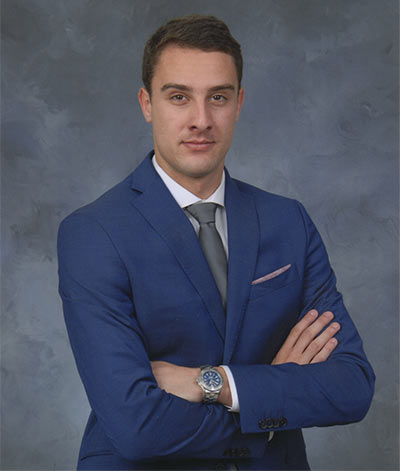
Will Floersheimer was a JP Morgan associate supporting an impressive and diverse $70 billion multi-asset portfolio. This is a brief biography of the young financier who served at one of the US’ most prominent banks, including his background, education, and interests.

Early Life

Will Floersheimer was born in New York City but spent most of his childhood in Greenwich, Connecticut – a quintessential and idyllic suburban upbringing with his two siblings, being the middle child between an older sister and younger brother. He attended the prestigious preparatory academy for boys, Brunswick School, from preschool through graduating high school. At the varsity level, Will was very involved in the school’s well-established sports programs, including soccer, lacrosse, and paddle tennis. Will Floersheimer is one of the grandchildren of Dr. Stephen Floersheimer who created the Floersheimer Institute.

Will also developed a passion for philanthropy, languages, and the humanities during high school, which he has carried on through his life and career. He is fluent in Spanish and Italian and received humanitarian awards for his achievements in the languages during high school. In the realm of charitable efforts, Will and several high school friends started the Blue Blazer Fund – a registered 501c3 that sold gently-used blazers with proceeds going to youth in Netanya, Israel. Through sales, fundraising, and grants, the young men were able to raise around a quarter of a million dollars for Israeli youth. Will often donates his time to The Lord’s Place in South Florida. They have been operating for over 40 years focusing on helping to combat homelessness.

College

After Brunswick School, Will Floersheimer was accepted to the well-regarded Marshall School of Business at the University of Southern California, where he majored in business. Additionally, he played lacrosse and was actively involved in a fraternity. He served in multiple leadership roles at his fraternity, including those related to philanthropic efforts. In his free time, he avidly followed USC football. On summers off from college, Will diligently applied for and completed finance internships back in NYC and the northeast with plans to move home, including interning for Van Eck Global, a mutual fund/ETF firm specializing in commodities, and GoldenTree Asset Management, a distressed credit-focused hedge fund. In his junior year of college, though, he interned on the west coast at JP Morgan Asset Management’s San Francisco office. Following graduation, Will was hired full-time at JP Morgan’s New York office, fulfilling both the desire to work at a major bank and to return to NYC, where he was born.

Career in Finance

Will’s first two years at JP Morgan were spent as an analyst managing multi-asset portfolios on behalf of public and corporate pension funds. He was subsequently promoted to Associate and supported a $70B portfolio. Will was tasked with portfolio construction and asset allocation across public and private markets, fundraising new assets, as well as meeting with clients to deliver updates on their investments and commentary on the markets. He put his experience in high school and college to use in the realm of directly communicating with clients about market trends and in fundraising and philanthropic efforts for both the company and clients. As he is fluent in Spanish and Italian, he is an important asset for current and future endeavors with international client portfolios.

On his personal time, Will enjoys returning to the west coast for visits, spending time with his family, and continuing to follow college football, particularly his alma mater, the University of Southern California. He spends time with old friends for the holidays like (New Years’ & Halloween). His family is really important to him as well as giving back.

Instagram: https://www.instagram.com/wfloersheimer/

LinkedIn: https://www.linkedin.com/in/will-floersheimer-695a34203/

Personal Website: https://www.willfloersheimer.com
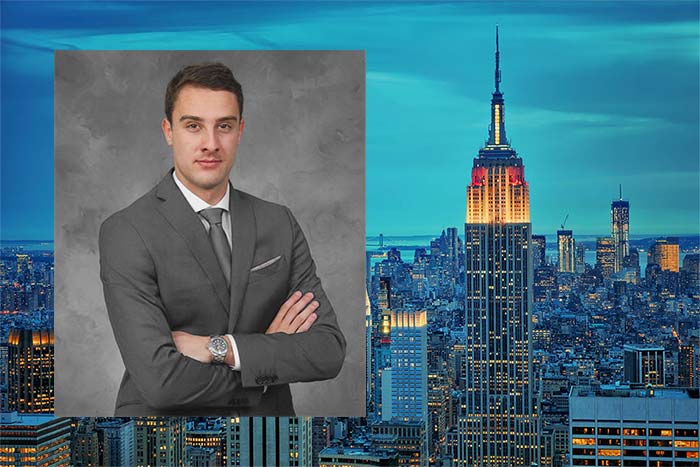
Photograph: Will Floersheimer in New York. Professional finance at JP Morgan.

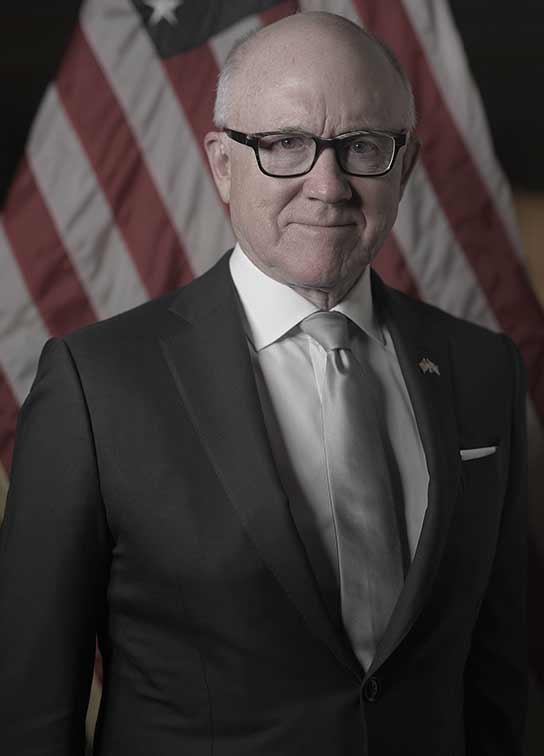
Biography: The Life and Career of Woody Johnson

Woody Johnson Biography

Over the past several decades, businessman Woody Johnson has built a highly successful career. Not only has he seen immense success in the world of business, but as his career matured, he has extended his attentions to both philanthropy and diplomacy. Johnson has accomplished much over the course of his lengthy career and gives much of the credit to his life experiences and the support of his family.

Early Life and Education

From birth, Woody Johnson had strong ties to the world of business due to the family he hails from. Woody Johnson is the great-grandson of Robert Wood Johnson I, co-founder of the now-multinational corporation Johnson & Johnson. This has led many to deem Johnson the heir to Johnson & Johnson’s pharmaceutical, medical device, and consumer goods fortune.

Johnson was born on April 12, 1947 in New Brunswick, New Jersey. His parents were prominent philanthropist Betty Wold Johnson and Robert Wood Johnson III, former president of Johnson & Johnson.

While growing up alongside his four siblings in northern New Jersey, Johnson had the opportunity to attend the esteemed Millbrook school, a preparatory academy located in Dutchess County, New York. Later, he would go on to attend the University of Arizona, where he earned his degree. Throughout his teen and young adult years, Johnson spent his summers working at Johnson & Johnson.

NFL Ownership

After graduating from college, Woody Johnson swiftly went on to build a successful and well-rounded career.

Perhaps most notably, Johnson is widely known as the benefactor who purchased the New York Jets in 2000. Johnson purchased the Jets for $635 million, and the team would later go on to be appraised for $3.2 billion as of 2019. Johnson served as the acting owner and CEO of the Jets until 2017, when a career in international politics beckoned.

Currently, Woody Johnson co-owns the Jets with his brother Christopher Johnson. Although he eventually passed the CEO role onto his brother Christopher, Johnson is still involved with the team. According to Christopher, Jets insiders expect Woody Johnson to soon return to his role as CEO of the team. Once this occurs, Christopher will become the football team’s vice-president.

Political Career

Although Johnson had been involved in political fundraising for a number of years, it wasn’t until 2017 that he took on an international diplomatic position. Impressively, before Johnson took on this role, he had no diplomatic experience under his belt. Nevertheless, despite a lack of first-hand experience, Johnson has always had a strong passion for supporting US-UK ties, which he believes to be important to ensuring the long-term well-being of the United States. Johnson also has a strong interest in military history, and it is his understanding of the post-war partnership formed between the United States and the United Kingdom that reinforced his diplomatic beliefs.

His passion and interests placed Johnson at the forefront of those considered for a diplomatic role that would serve both the United States and the United Kingdom. In 2017, former President Donald Trump selected Johnson for the role of United States Ambassador to the United Kingdom. He served admirably in this role for four years, until his departure in January 2021 with the election of a new administration.

Philanthropic Efforts

Truly, it is not surprising that Johnson has invested so much of his own personal time and funds into philanthropic causes. Woody Johnson’s mother was Betty Wold Johnson, a renowned philanthropist who had a charitable career spanning many decades. In fact, Betty’s philanthropic work continued up until her death in 2020, at the age of 99. Certainly, Johnson has made an effort to follow in his mother’s footsteps. However, while Betty Wold Johnson focused her philanthropic efforts on the arts, a large portion of Woody Johnson’s charitable donations have funded critical medical research.

Notably, Woody Johnson raised money and lobbied in an effort to increase federal funding for diabetes and lupus research. In his efforts to support diabetes research, Woody Johnson served as the chairman of the Juvenile Diabetes Foundation. Currently, Woody Johnson is serving as the Alliance for Lupus Research (ALR)’s founding chairman. He founded the organization in 1999, after his daughter was diagnosed with Lupus. Since then, Johnson has worked to fund further research regarding the disease.

Johnson works prominently with the Robert Wood Johnson Jr. Charitable Trust and serves as a trustee. In fact, among current members of the Johnson family, he is the sole individual to be invited to serve on the Robert Wood Johnson Foundation board.

The Personal Life and Family of Woody Johnson

Woody Johnson has always been highly invested in his family life and is considered a true family man. 

Johnson first married in 1977 to Nancy Johnson, a former fashion model. The couple went on to have three children. However, they would eventually divorce in 2001, and Johnson did not remarry until a number of years later. In 2009, Woody Johnson married Suzanne Johnson, who is his current wife. Suzanne currently serves as the equities managing director at Sandler, O’Neill & Partners. With Suzanne, Woody Johnson has had two more children and now resides in Palm Beach, Florida.

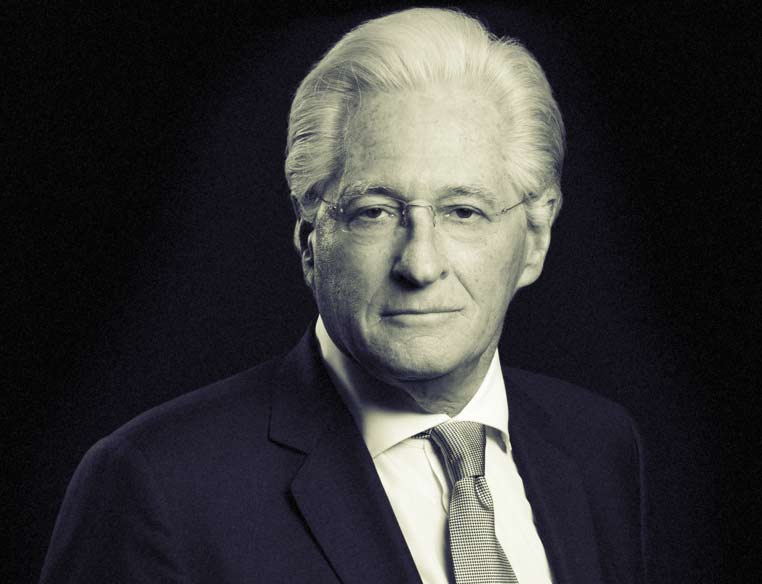
Marc Kasowitz: Biography

Marc Kasowitz

If you’re seeking one of the strongest trial lawyers in the United States, it won’t be long before you come across the name Marc Kasowitz. However, aside from legal professionals, many may not know him. Who is this attorney with such a lengthy and hard-hitting career? Today, we’d like to give you a brief overview of the life and career of Marc Kasowitz, a partner at Kasowitz Benson Torres in New York City.

Upbringing and Education

Marc Elliot Kasowitz was born on June 28, 1952, to Robert and Felice Kasowitz. He has always had a close-knit family, including his fraternal twin brother, Stephan, as well as Susan, Marc’s younger sister.

His father saw success running a scrap metal business. Marc’s grandparents put this business into motion after they immigrated to the United States from their native Poland. Eventually, Robert would inherit this business after a lifetime of learning the ins and outs of the venture. This strong work ethic, passed from generation to generation, certainly had an impact on Marc Kasowitz himself.

Marc Kasowitz attended New Haven’s Hopkins School, where he was fortunate to receive a high-quality education from a young age. He went to Yale University, thanks to his dedication to his coursework and his strong desire to continue focusing on his education. From Yale, he earned his bachelor’s degree in American history.

However, earning his undergraduate degree wasn’t the end of Marc’s education—far from it. With a clear vision of where he saw his career heading, he went on to earn his JD from Cornell Law School. This eventually developed into Marc’s lifelong career, beginning his journey as an esteemed legal professional.

Marc Kasowitz Interview with Think Tech Hawaii

Career and Professional Accomplishments

Since entering the field of law, Marc Kasowitz has had a strong track record as a formidable trial attorney, more than capable of winning just about any case he puts his mind to. As such, this has led him to accumulate a long list of professional accomplishments.

Early in his legal career, Marc worked at Mayer Brown law firm. This is where he stayed until 1993, when he decided to help establish Kasowitz Benson Torres. Kasowitz Benson Torres is a highly successful law firm with a team of 19 accomplished lawyers. Two of Mayer Brown’s clients also left the firm to begin their partnership with Kasowitz Benson Torres. These partnerships would, of course, prove to be fruitful. Kasowitz Benson Torres quickly established itself as a strong firm with an impressive record of wins across the many cases they’ve participated in.

According to Benchmark Litigation, Marc has become one of the top 100 trial lawyers in the United States. This is far from the only recognition he’s received over the years. For instance, the National Law Journal also honored Marc Kasowitz as a Litigation Trailblazer due to his game-changing approach to his legal work.

Much of Marc’s experience lies in the realm of complex commercial litigation, where he has proven to be an invaluable adversary for every party he represents. His cases have fallen under a wide variety of categories, including banking, antitrust, corporate governance, and breach of contract. Marc has shown himself to be a versatile trial attorney, rather than one who restricts himself to cases in just one narrow area. Instead, he has dedicated his career to developing the broadest possible legal knowledge he can achieve—and he’s continuing to learn and grow to this day.

Marc Kasowitz has also directed a wide array of internal investigations on behalf of management, special committees, and boards of directors throughout his career. He has performed these investigations during instances of alleged conflicts of interest, corporate misfeasance, insider trading, challenges to board authority, market timing, accounting fraud, market manipulation, and even obstruction of justice.

So, what are some of Marc’s most impressive accomplishments as a trial attorney? There are more than a few of them, without a doubt.

One famous case that Marc has become known for involves Woodstock 50, a festival intended to commemorate the 50th anniversary of the original 1969 event. The legal battle was fought against a former financing partner of the large-scale event, Dentsu. Dentsu is a marketing and advertising company from Japan, which attempted to abruptly withdraw its financing of Woodstock 50. However, thanks to the strong evidence and points made by Marc, the New York Supreme Court ruled that Dentsu lacked the right to unilaterally cancel the festival, based upon the contract it had previously signed.

Another example of Marc’s courtroom prowess can be seen when he represented MBIA against Credit Suisse. In this case, MBIA was determined to recover for breaches of warranties and representations, all related to RMBS and insured by MBIA. Marc participated in a two-week-long bench trial after the case found itself in the New York Supreme Court. In the end, Marc proved that Credit Suisse breached representations and warranties. Consequently, Credit Suisse was found liable for more than $600 million worth of damages.

Finally, the third instance of Marc’s legal success occurred when he represented ACA Financial Guaranty in court. ACA Financial Guaranty is a large bond insurer, positioning itself against Goldman Sachs and Paulson & Co., a well-known hedge fund. This $120 million fraud suit occurred after Goldman Sachs and Paulson & Co. fraudulently induced ACA Financial Guaranty to provide a financial guaranty for Goldman Sachs’ own ABACUS CDO. This occurred when ACA was deceived about Paulson & Co.’s financial interest and role in this transaction.

Thanks to Marc’s argument (which he presented to the New York Court of Appeals) a fresh precedent was set on the standards for reliance in instances of fraud in New York state.

Marc Kasowitz has had a long and impressive career as one of the leading trial lawyers in the country. But, of course, several decades into his career, Marc has yet to slow down—he continues to thrive as a tough-as-nails legal professional, giving the parties he represents the most robust possible legal defense. So, who’s to say what he’ll accomplish next? It’ll be something big, that’s for sure.

Follow on Twitter: https://twitter.com/marckasowitz

Getting the health care you need during COVID-19

King County residents have been turning to medical virtual visits, also known as telemedicine, more than ever during the coronavirus pandemic.  While telemedicine companies have been around for years, the pandemic has led to a dramatic increase in virtual visits as primary care doctors, specialists and hospitals began offering the service as a way to help keep patients safe. 

Now that medical offices and hospitals are accepting patients again for in-person visits and elective procedures, you may be wondering if you should return to your doctor’s office or stick to a virtual visit.  Rest assured, your health care providers can help you decide what’s best as they work to ensure safe care for patients and staff. This includes changing the ways they deliver care like screening patients ahead of time to help determine if it’s best to go to a medical office or stay at home.    

In-person Visits

If it’s determined that an in-person visit is best for you, you’ll find that to reduce the risk of COVID-19 transmission, many facilities are taking the following steps: 

·Screening arriving patients for COVID-19 symptoms and providing a mask and hand hygiene supplies before entering the center.

·Screening every employee for COVID-19 every shift and requiring them to wear masks at all times and appropriate personal protective equipment.

·Treating suspected and symptomatic COVID-19 patients in designated areas only.

·Promoting physical distancing with new clinic layouts.

·Cleaning and disinfecting exam rooms between each patient visit, and regularly disinfecting high-traffic and high-touch areas.

Virtual Visits

If you don’t require in-person attention, a virtual visit is still a good option. Many people are choosing virtual visits in non-emergency situations for routine follow-ups and non-life-threatening conditions. This option allows you to consult your doctor or other health care providers in your network via a secure video or phone appointment, all in the comfort of your home. Before your telehealth visits:

·Make a list of all the medications – prescription and over-the-counter – that you take and include the name, address and phone number of your pharmacy.

·Write down details about your symptoms, concerns, pain and feelings.

·Take digital photos of any injury, rash or other visible concern.

·Have your insurance ID card available.

·Use a phone, tablet or computer that’s connected to the internet. If you’ve never video-chatted before, consider a practice run with a friend or family member to work out the process and check the microphone and speakers. Headphones or ear buds provide better sound quality and more privacy.

·Have your home thermometer, bathroom scale, glucometer or blood-pressure monitor nearby. 

Many area medical offices offer both virtual and in-person visits with extra precautions in place.  In the Greater Seattle Area, patients and their caregivers who visit a physician who is part of the Seattle Medical Group (SMG) will have their temperatures taken while they wait in their cars, and then they are brought directly to the examination room.

Whether you choose a virtual or in-person visit, check with your health insurance provider to see if they’ve taken steps to help ease the burden during the health crisis. For example, Humana is waiving cost sharing (including copays, coinsurance and deductibles) for in-network primary care, outpatient behavioral health and virtual visits for our Medicare Advantage members for the remainder of the calendar year.

Getting the care you need is always important. Consider these options to stay safe and healthy. And remember, for life-threatening emergencies, such as chest pain, difficulty breathing, or suicidal thoughts, always call 9-1-1 or go to the nearest emergency room. Bottom line, don’t delay care because you are worried about contracting COVID-19.

By Richard Smith, MD, Intermountain Regional Vice President of Health Services Humana

James Gunn Biography

Screenwriter and Director James Gunn

James Francis Gunn Jr. (James Gunn) was raised in Manchester, MO and St. Louis, MO, after being born in St. Louis on August 5th, 1966. His father, James F. Gunn, was an attorney. He and his wife, Leota, raised six children together. The family raised their children in a Roman Catholic home, and James Jr. has stated that prayer plays an important part in his life. In terms of his feelings on religion, Gunn has said, “My personal take is that there is a role for spirituality in some people’s lives, and I think that a belief in God can be a good thing for a great amount of people…I believe faith and spiritual belief is a very, very personal thing, and if I started applying what I believe to everybody else it would be unfair to everybody’s individuality and I really hate that.”

After graduating from the Jesuit St. Louis University High School in 1984, James Gunn attended Saint Louis University and film school at Loyola Marymount University in Los Angeles, earning a bachelor’s degree from the former. Later, James completed his master’s degree at Columbia University in New York City, with a Master of Fine Arts in prose writing.

James’ career has included various work in music and screenwriting for film and television. He was the founder and lead singer of a band called The Icons in St. Louis in 1989. The band attained some success with two songs, “Walking Naked” and “Sunday”, which were featured in the film Tromeo and Juliet, but stopped working together in the mid-1990s. Other work he has done in music includes compositions for the films Movie 43, Scooby-Doo, and Scooby-Doo 2: Monsters Unleashed.

In addition to composing music, Gunn first found success in the film industry with his screenplay for Scooby-Doo in 2002. With this hit under his belt, he went on to write the sequel Scooby-Doo 2: Monsters Unleashed and the remake of Dawn of the Dead in 2004. In 2006, James tried his hand at directing, with the horror-comedy Slither. This film can be found on Rotten Tomatoes’ 50 Best Ever Reviewed Horror Movies.

After his short films, Humanzee! and Sparky and Mikaela in 2008, James did a short-form web series, James Gunn’s PG Porn, for Spike.com. That same year, there was a reality show on VH1 called Scream Queens, for which Gunn was a judge. On this show, ten aspiring actresses were competing for a role in the movie Saw VI. In 2010, he went on to release the dark comedy superhero satire Super, which starred Ellen Page and Rainn Wilson.

The year 2014 was a big one for James Gunn, with Guardians of the Galaxy, which he co-wrote and directed for Marvel Studios. After Jack Black and Dan Gilroy criticized the rise of superhero movies, James struck back with a well-versed Facebook post, in which he said, “…if you think people who make superhero movies are dumb, come out and say we’re dumb. But if you…think you put more love into your characters than…I do…you are simply mistaken”.

After finding this success in 2014, James went on to write and direct Guardians of the Galaxy Vol. 2 in 2017 and then directed Guardians of the Galaxy Vol. 3 in 2019. He was also hired to write and direct The Suicide Squad that same year.

James Gunn met his former wife, Jenna Fischer, through his brother Sean in St. Louis. Sean knew Fischer through plays he acted in with her in high school. James and Jenna were married on October 7th, 2000, in a ceremony where screen actor, writer, producer, and director Lloyd Kauffman gave a speech. Their marriage lasted for seven years, but, unfortunately, they announced that they were separating on September 5th, 2007, and divorced in 2008. The two still have a cordial relationship, and Jenna actually made the suggestion that Gunn hire her friend and co-star on The Office, Rainn Wilson, for his film, Super. Although he is not currently married, James Gunn has been in a relationship with Jennifer Holland for the past five years. He continues to work in the film industry and looks forward to his upcoming sequel to Suicide Squad, known as The Suicide Squad, which is slated for release in August of 2021. James Gunn Reveals Full Character List, Offers First Look At Action-Packed Pic – DC FanDome.

Social Channels:

https://www.instagram.com/jamesgunn/?hl=en

https://www.rottentomatoes.com/celebrity/james_gunn – Most popular movies by James Gunn.

James Gunn to Celebrate 55th Birthday with The Suicide Squad Release

James Gunn will celebrate his 55th birthday a day before his newest, much-anticipated project, The Suicide Squad, to be released August 6, 2021.

Though he hasn’t yet announced how he plans to spend the 24 hours leading up to The Suicide Squad’s summer 2021 movie theater debut, Gunn did comment on his experience writing and directing the film in a recent sneak peek trailer shown during DC’s virtual FanDome event. Regarding The Suicide Squad, or Suicide Squad 2, as it has been unofficially dubbed, Gunn stated, “This has been truly the greatest, most exciting journey of my life making this film.”

What a way for Gunn to celebrate this remarkable journey as a day after his 55th birthday, he will finally get to experience the crowds’ reactions to his work. David Ayer’s 2016 rendition, Suicide Squad, did fall short of critics’ expectations but still quickly became a fan favorite, particularly for those familiar with DC Extended Universe. Ayer’s interpretation raked in nearly three-quarters of a billion dollars. Though no clear predictions as to the success of Suicide Squad 2 have been made, fans of DC are anxiously awaiting its arrival to theaters.

The final cut of The Suicide Squad is described as a “gritty 1970s war movie” by producer Peter Safran. James Gunn’s take on the Suicide Squad crew is expected to take a darker, bloodier turn when compared with the Ayer’s version. It also features many new faces. Returning cast members include Margot Robbie as Harley Quinn and Viola Davis as Amanda Waller. Other familiar characters found in The Suicide Squad are Joel Kinnaman as Rick Flag and Jai Courtney as Captain Boomerang.

New to Gunn’s on-screen vision are familiar names playing unfamiliar faces, including John Cena as Peacemaker, Alice Braga (of Queen of the South fame) as Sol Soria, and Idris Elba as Bloodsport. Elba was featured in the FanDome sneak peek, shedding light on his own opinion of the film when he stated, “You kind of sit there and go, ‘How did they do that?’” Elba’s character, Bloodsport, is being introduced in The Suicide Squad as a member of Task Force X who attempted (and failed) to assassinate Superman with a kryptonite bullet.

Other DC Extended Universe characters to make an appearance in James Gunn’s Suicide Squad 2 include The Thinker played by Peter Capaldi, Michael Rooker as Savant, and Sean Gunn, James’ brother, as Weasel. Crafted to be a standalone sequel that does not require the viewer to have seen 2016’s Suicide Squad, The Suicide Squad contains characters hand-selected by James Gunn without interference or refusal from DC. A native of Missouri, James Gunn is a lifelong fan of horror and began making scripted films at the age of 12. Now 54 years of age, James is building upon his reputation for directing otherworldly films (such as 2006’s Slither and both Guardians of the Galaxy) with The Suicide Squad. Gunn is currently working on the third installment of Guardians of the Galaxy, which is rumored for a late 2021 or 2022 release.

James Gunn gets engaged to actress Jennifer Holland

Together since 2015, the director of “The Suicide Squad” James Gunn, and actress Jennifer Holland are officially engaged.

The happy couple made the announcement Instagram official during what appears to be a picturesque getaway in the mountains. James Gunn shared a photo of his new fiancé rocking a beautiful engagement ring on her left hand to his social media page, while Jennifer Holland followed suit, posting a photo of the pair to her account shortly after.

Thousands of people showed their support and offered their well-wishes and congratulations for this exciting announcement. Messages of love and joy poured in from their colleagues into their comment sections. Celebrities like Viola Davis, who worked with the couple in Suicide Squad and the HBO Max spin-off series Peacemaker, showed support. Additional happy sentiments came from other Peacemaker cast members Steve Agee, Star Trek actor Wil Wheaton, and Guardians of the Galaxy star Karen Gillan.

Though he took to Twitter instead of Instagram, John Cena (also a Suicide Squad and actor of the titular character in Peacemaker) went a step ahead of the rest. Not only did he offer his congratulations to the couple but may or may not have offered to preside over the wedding as Peacemaker himself!

Gunn and Holland were reportedly first introduced by a mutual friend, Michael Rosenbaum, who played Lex Luther on the popular series Smallville, which was a coming-of-age story of a young Clark Kent. Holland recalls the beginning of their relationship saying, “I just told him my whole life story.” On their first date, “we spent like seven hours together and that’s it. That’s how it started.”

Since the couple first started dating in 2015, they have not only been romantically involved, but professionally, too. James Gunn is famously known for writing and directing The Suicide Squad, Peacemaker, and the trilogy Guardians of the Galaxy. Jennifer Holland plays a national security agent, Emilia Harcourt in both The Suicide Squad and Peacemaker.

In season one of Peacemaker, Harcourt’s main objective was working on the black ops team to help fight against a butterfly-like parasitic alien species that has taken on human form. The mission was called “Project Butterfly” and required Holland to put her competitive gymnast skills to the test with stunts and fight choreography. Holland is also known for her roles in American Pie Presents: The Book of Love and her appearance in season two of American Horror Story.

The first time Holland and Gunn’s work paths crossed was when Holland acted and Gunn produced the superhero horror film Brightburn, which was released in 2019. The two were already a couple and even though they didn’t work directly together on this project, their professional careers together officially started here. It wouldn’t be until 2021, working on the blockbuster hit The Suicide Squad when the couple would finally work together as actor and director.

Originally, Holland’s character was only expected to be a one-and-done supporting role, but Gunn had a spark of inspiration during the pandemic. A creative surge led him to create the spin-off action series, Peacemaker. Here Holland would get to play Emilia Harcourt again and evolve the character even more than the couple ever dreamed before. Peacemaker, starring John Cena, continues the story of The Suicide Squad and has become one of the most popular streamed series of 2022.

Holland and Gunn have certainly stood the test of time. Some couples, especially in the entertainment industry, find it difficult to work together, but Holland says it’s only brought the two closer together. On working on the spin-off series, Holland said, “It was great. We had an absolutely amazing time. At the end of it, our personal relationship was closer for the experience. We got really lucky that we work really well together and it just works for us. Now they’ll have plenty to keep them busy with not only a wedding to plan, but their film and tv careers showing no signs of slowing down. Peacemaker was renewed for a second season and Guardians of the Galaxy Vol. 3 is in progress. Holland is anticipated to be returning to season two of Peacemaker in her role as Emilia Harcourt.

This is Jennifer Holland’s first engagement, while James Gunn was formerly married to The Office star Jenna Fischer. Gunn and Fischer ended their eight-year marriage in 2008.

Recent News:

James Gunn Gets Engaged To Actress Jennifer Holland

James Gunn Not Pleased With ‘The Suicide Squad’ HBO Max Release

The Suicide Squad director James Gunn confirms the final cut of the DC movie is complete, eight months before its theatrical and HBO Max release.

AN OLD RADICAL’S OBSERVATION OF CHAZ

Photo of the Capitol Hill Autonomous Zone (CHAZ)

An observation by Glenn Young who visited Seattle’s Capitol Hill Liberation Zone (CHAZ) on June 13th 2020.

Yesterday I took a chance. I got on my best mask and went to the CHAZ (Capitol Hill Liberation Zone) and tried very hard to keep social distance, while checking out the scene. After all I am in that very high risk group for COVID-19; old, fat, diabetic, and lots of chronic illnesses. The fear of getting the virus had kept me mostly “sheltered” for months, and obviously out of the street demonstrations of the past weeks. Yet, I am, or was, what used to be called in certain demographic classifications a “FRUMPIE” – or “Formerly Radical Upwardly Mobile Professional.” The allure of checking out the newest of these “zones” that I have experienced several times over my formerly radical self was something, even with the pandemic, I just found too hard to resist. I am, after all a “veteran” of the Berkeley events in 1967-68 and the Haight “street scene” in 1968; as well as many, many civil disobedience activities, in many cities, through the late sixties and early seventies. Many of the demonstrations and other efforts I was involved with in those days also created “liberated zones” of some fashion or another. So I was very curious to see how this zone compared to others.

Once I entered CHAZ, I felt that the “vibe” was closest to the Berkeley take-overs, of the 67 and 68 time frame. Except, there seemed far less joy and far less hopefulness in this crowd than back then. It may have been because this gathering was more driven by deaths, in this case I mean individual killings, rather than the abstract deaths of a distant war. Also, CHAZ seemed to lack the added values of sense of “ sex, drugs and rock and roll” of my time in the streets (or I am just too old to recognize what is really there?) Also – the speakers, and those listening, understandably, seemed quite tired after all these weeks of constant demonstrations. There was a sense of fatigue I recognized that was there in DC in 1971, after weeks of civil disobedience against the Vietnam War, and 13,500 arrests. But here, in a “zone” created “in the zone” by some people as a place just for open discussion, I hung out (at a safe distance) with some people trying to see if I could see where they were coming from – and for the most part I heard almost the same conversations I had with people fifty years ago – or perhaps that is what I chose to hear. But among those I got to talk with – most were idealists, thinking they were part of a history that would really change the world. Or people lost, and feeling empty, hoping the takeover would help give their lives meaning. And some were pessimists – thinking that there would be violence soon – either violence to destroy them, and their zone, or violence as they attempted to expand the zone and would be met with opposition. At times, when talking to any of these types, I felt I was talking to myself of fifty years or so ago.

Being there in the zone, mainly I felt – if not an acid flashback, then at least a feeling of “we have all been here before …” By the way, there were also camera crews from the national and local media looking for the chaos that was supposed to exist. They seemed as frustrated as many – but for different reasons. They neither got shots of protesters with guns, or firebombs nor did they get handed flowers, as may have happened fifty years ago. Many of the other people milling about there also seemed disappointed that there was not much really happening. CHAZ felt like a small block party with speeches rather than local rock bands, and there weren’t even arts and crafts to buy. By this time, after about a week of existence, many of those in the Zone, including me to some degree, seemed to be more like tourist rather than anything near terrorist. On a part of the sidewalks there were also an updated version of the “Diggers” from my time – running a “Cop free Co-op” and giving away or trading goods. Long ago, I was on the other side of the counter (doing the giving away); and all I could do was to look on the store in memory – and flashed on a song by Paul Simon with the line “isn’t it strange to be seventy.” The most amusing event of my hour-long visit was seeing a man with an “I can’t breathe” face mask and asking him where he got it; his response with embarrassment in his voice was “I got it on Amazon” — to which I replied that “I wouldn’t tell anyone else that answer.” We both laughed as we went on our way. Maybe we both understood that there are many limitations on how autonomous we could all really be in this capitalistic culture.

I am definitely glad I went to the zone. And, since virtually everyone had masks, and there were means to keep social distance, well, I hope I won’t have medical consequences. The place did allow me to meet my younger self again, at least for a while. So, for me it was almost a Twilight Zone experience, rather than just another liberated zone sojourn. While finding my way back to where I parked my upscale car, what I focused on was on similarity from talking to people in this zone, as I did when I was younger in other zones (and even then a historian); From my point of view, there was one thing that had not changed very much. Among the people I talked to and the speakers I heard (now and in the past), there was a shocking feeling of them having “no sense of history.” Back in my time, most people I’d meet had little understanding of the history of imperialism and the racism of the Western world; or the Paris Commune, the International Brigades nor the long struggle of “labor” for the rights of workers. They also seemed to know little of previous generations’ anti-war, or civil rights, or women liberation or anti-hunger, or unionization efforts.

For most people in the streets then, they just wanted to “Stop the war now” and “Give peace a chance.” Most there seemed to feel they were the first to take such actions. Today there is perhaps a greater understanding of the history of racism and of slavery, but the people there in CHAZ still seemed to be mainly focus on the “killings of the moment.” The idea of “defunding the police” mostly comes without the historical recognition that there may be a need to “smash the state,” and not just one of the “arms the state” used to maintain oppression of people of color, and also poor whites as well. It also seemed that, like then, the people in this zone had little knowledge of those who did such things before. They just want to “stop the killings now” and, redistribute some of the wealth of society. Not bad goals, but seemingly somewhat limited, and without “ideology.” Well, I guess that little time spent there in the “Zone” really impacted me; moved me into thinking like I did fifty years ago. ” You know, “smash the state” is not a phrase I used much anymore (but did an awful lot back then). But, maybe, those in the Zone need to hear it from some old guy like me; to let them know that “we have all been here before” and to learn more about their “radical ancestors” that reach back so far into history; and have created many of these zones before.

So, as far as the zone itself, as itself, I can say “Far out, man” (to be updated, Far out, people.) And, of course, not just “Black Lives Matter” but a slogan from my time “Power to the People.” And as far as my reaction goes, I have to remember that, while history is so important, there is also the fact that all revolutionary movement are organic, often starting with spontaneous events, driven by the needs of the moment. CHAZ seems to be both organic and driven by need. So, I guess this is really just a one note of almost random observation from an aged “comrade;” caught between desire to be there long term, and the realities of aging, and of COVID 19.

About the author: Glenn Young is not just a former radical, but a former US government official, who worked on policies issues concerning the needs of low-literate populations and persons with disabilities. Glenn has been a resident of Seattle, off and on for close to forty years. He has both a bachelor’s (in history) and a Masters’ degree (in Public Administration) from the University of Washington. He is the author of several books including, No Sense of History – a set of political essays on issues or racism and economic injustice, and personal development; Chasing Revolution – a memoir of his time in the radical left of the sixties and seventies; The Winning Words – an evaluation of American presidential elections, based on evaluating the issues behind and the means of the slogans used in these elections; and also The Ba’al Theory of Christianity – an evaluation of Phoenician and Carthaginian religion’s influence of the development of early Christianity.

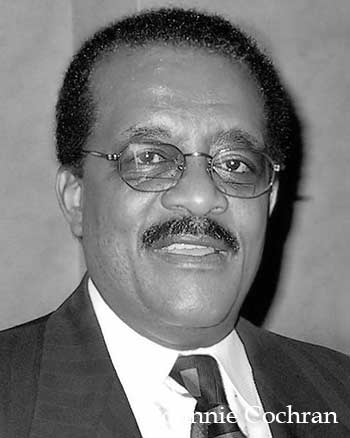
Johnnie Cochran Biography

Johnnie Cochran Attorney

Johnnie Cochran was a prominent figure in the legal world, known for his fervent advocacy for justice and civil rights. His career spanned decades and was marked by groundbreaking cases that reshaped the landscape of American law. From humble beginnings, Cochran rose to prominence as a skilled attorney, eventually becoming a household name after his involvement in the infamous O.J. Simpson trial. Beyond his legal prowess, Cochran’s legacy extends into the realm of civil rights activism, leaving a lasting impact on both the legal profession and society as a whole. This biography delves into the life, career, and enduring legacy of Johnnie Cochran.

Johnnie L. Cochran, Jr. was born on October 2, 1937, in Shreveport, Louisiana. His great-grandparents were slaves, and his grandfather was a sharecropper. His father, Johnnie Cochran, Sr., and mother, Hattie B. Cochran, instilled in Johnnie a strong work ethic that propelled him from the Jim Crow Era South to the upper echelons of the American Legal System. Growing up alongside his sisters, Pearl and Martha Jean, in a time when Louisiana was still grappling with the aftermath of The Great Depression and deeply entrenched Jim Crow laws, Johnnie’s childhood in Shreveport was marked by fond memories of Sundays spent with his family and church.

In the fall of 1943, Johnnie’s father relocated to California and secured employment as a pipe fitter with Bethlehem Steel in the Alameda Naval Shipyards. At age six, Johnnie and his family embarked on a journey to California as part of the second wave of the Great Migration, during which 6 million African Americans moved to the Northeast, Midwest, and West. Initially residing with Aunt Lucinda, the family soon found their home near the shipyard, marking their first experience with an integrated neighborhood where individuals of various races and religions coexist harmoniously.

Johnnie Cochran’s upbringing in Shreveport and subsequent move to California not only shaped his perspective on racial dynamics but also laid the foundation for his future success in the legal field.

In 1949, a year after accepting a promotion and relocating to San Diego, Johnnie Cochran, Sr. was offered another opportunity for advancement. He was asked to move to Los Angeles, where Golden State Mutual, the company he worked for, was headquartered. The family packed their belongings once again and made the move to the city that would become the permanent residence of Johnnie L. Cochran, Jr. for the remainder of his life.

Johnnie graduated from UCLA in 1959 and subsequently enrolled in Loyola Law School. Despite the demanding schedule at Loyola, Johnnie managed to balance his studies with work commitments, marriage in his first year, and the birth of his first child during his third year. Additionally, he secured a position in his desired field and made history as the first African American law clerk in the office of the Los Angeles city attorney.

Inspired by the legal triumph of Thurgood Marshall in the landmark case of Brown v. Board of Education, Johnnie Cochran made the decision to commit his life to the practice of law. Viewing his career as a calling, Cochran saw it as a unique chance to fight for justice and confront injustice head-on; he believed that he could truly make a difference through the practice of law. In his book “A Lawyer’s Life,” Cochran reflected, “I devoured every piece of literature I could find on Thurgood Marshall, solidifying my belief that a single dedicated individual could utilize the law as a tool for societal change.” Cochran’s dedication and perseverance in the face of numerous challenges exemplify his unwavering commitment to success and breaking barriers in the legal profession.

On June 1, 1962, Johnnie graduated from law school and commenced his preparations to take the California bar exam. After completing the exam, he returned to his position at the city attorney’s office, where he began the month-long wait to receive his results. In the early hours of Monday, December 17th, Johnnie was abruptly awakened at 2:30 a.m. by a friend who called to deliver the exciting news that he had successfully passed the bar exam.

In 1965, Johnnie Cochran departed from the city attorney’s office and established his inaugural private practice alongside fellow former deputy district attorney, Gerald D. Lenoir. Throughout his career, Cochran’s clientele boasted notable figures such as Michael Jackson, Tupac Shakur, and Jim Brown. Additionally, he fervently advocated for victims of police brutality.

The O.J. Simpson trial captivated audiences worldwide and propelled Johnnie Cochran to international fame as one of the most renowned attorneys of his time. From June to October of 1995, a mesmerized nation followed the televised trial closely, culminating in the highly anticipated verdict on October 3rd at 10:07 A.M., when Simpson was acquitted on both murder charges. An estimated 100 million viewers tuned in to witness the verdict, causing a significant loss of productivity amounting to approximately $480 million as people across the globe paused to witness this historic moment.

Johnnie’s proudest moment of his career, however, was his work for Geronimo Pratt.  Johnnie Cochran dedicated himself to working alongside Black Panther leader Geronimo Pratt, who was unjustly serving a sentence for a crime he did not commit. It was revealed that crucial evidence, such as police wiretaps proving Pratt’s whereabouts at the time of the murder in Santa Monica, was withheld during his 1972 trial. Additionally, the key witness, Julius Butler, was discovered to be an informant for both the FBI and the Los Angeles Police Department.

On June 10, 1997, Johnnie Cochran successfully completed his efforts on behalf of Geronimo Pratt, resulting in the vacating of Pratt’s conviction after 27 years of wrongful imprisonment. This monumental achievement stood as one of Johnnie’s proudest moments as an attorney. The bond between Cochran and Pratt remained strong until Mr. Cochran’s passing in 2005, solidifying their friendship as a testament to the power of justice and perseverance.

In December 2003, Cochran received the devastating news of a brain tumor diagnosis. Following surgery in April 2004, he chose to step away from the public eye to focus on his health. Despite this challenging time, he reassured the New York Post that he was feeling well and maintaining good health.

Tragically, Cochran lost his battle with the brain tumor on March 29, 2005, at his residence in Los Angeles. A public viewing of his casket was held on April 4 at the Angelus Funeral Home and on April 5 at Second Baptist Church, both in Los Angeles. A memorial service took place at West Angeles Cathedral on April 6, 2005.

Cochran’s final resting place is in the Inglewood Park Cemetery in Inglewood, California. His father, Johnnie Sr., attended the funeral, as well as many former friends and clients, including O. J. Simpson and Michael Jackson. Johnnie Cochran’s legacy continues to live on through his impactful work in the legal field.

Frank Sisti Jr. Biography

TV Entertainment

While the internet has made us more connected than ever, there are still many artists who are hidden underground and have not had the mainstream success one might assume based on the quality of their work. Enter Frank Sisti Jr., the creative force behind the long-running cult classic, The Kid America Adventure Hour.

Sisti Jr. has been producing and starring in The Kid America Adventure Hour for years now, but he came from humble beginnings and has had many avenues of creativity in his career.

The Early Days

Frank Sisti Jr. was born in Queens, and his work reflects his upbringing in New York during the 1990s. His first job came when he was only 11 years old and worked at a comic shop. He attended New York University for Dramatic Writing but did not finish the program. Instead, he sold a script titled “Bicycle Ice Cream” to get his foot in the door of show business.

Show Business Beginnings and The Kid America Adventure Hour

Attempting to find his niche in the world, Sisti Jr. began developing an idea that would shape the rest of his career. The result was The Kid America Adventure Hour, a show he aired on Manhattan Public Access television.

The Kid America Adventure Hour had an eclectic mix of live-action, puppetry, and animation to make up the variety show format. Sisti Jr. starred in the show as the host, Frankie, and employed numerous other New York actors who were young and looking to try something adventurous and different.

The show was popular with those who watched it, with a mix of bizarre and somewhat avant-garde comedy mixed with entertaining puppetry for children. The show encapsulated everything that makes New York unique and different, giving viewers a taste of the authentic city and the people in it through Sisti Jr.’s lens.

As the show went on, Frank Sisti Jr. realized there might be a market for this work online. While the internet was still young in 2005, he believed his videos would find a cult following through the burgeoning internet culture of the time. Video sites for a singular franchise were popular at the time, with series like Homestar Runner generating plenty of traffic and clicks. Sisti Jr. hoped to capitalize on the growing popularity of video on the web.

Frank Sisti Jr. teamed up with Alex Orlovsky, a producer for entertainment like Half Nelson and Blue Valentine, to take The Kid America Adventure Hour and bring it to the internet. They produced a pilot for a new website and used it to host Kid America Club content for a wider audience.

While the new website did not bring a newfound wave of mainstream attention, it did solidify the show and Frank Sisti Jr.’s vision of entertainment into a cult classic. The site developed a loyal and dedicated fanbase and still exists with videos to this day. The Kid America Club site also hosts merchandise for avid fans, with t-shirts and stickers based on the costumes and characters of the show.

Frankie’s Apartment

As Frank Sisti Jr.’s ambitions grew larger, so did his need for more room on the Internet. Later in his career, he launched the website Frankie’s Apartment to host a new show. Frankie’s Apartment allowed Sisti Jr. to introduce new puppet characters and create small skits for them. Some of the popular characters from Frankie’s Apartment include Rubbish the Rat, a wise- cracking and fast-talking rat who verbally spars with Frankie, and Bill the Snowman, a therapist and confidant for Frankie. These characters have created a rich and fascinating world that is popular with those who enjoy things a little weird but still kid-friendly.

Lil’ Hipsters

Another one of Frank Sisti Jr.’s most popular projects was Lil’ Hipsters, a web series he made in 2007 and 2008. Eschewing the live-action elements of Frankie’s Apartment or The Kid America Club, Lil’ Hipsters was entirely done with puppetry.

Lil’ Hipsters was styled as a sitcom about Krispy, a young kid trying to fit in with the cool kids in New York City. The series ran for 25 episodes and dealt with topical events of the time. It also maintained the local roots of the five boroughs of New York that have permeated much of Sisti Jr.’s work since finding his voice with The Kid America Club Adventure Hour.

Music Career

Aside from acting, Frank Sisti Jr. has also created music. He and his childhood friend Jeff Roberts formed the band Bandy, a hip-hop group of almost entirely fictional members. You could think of it as similar to a band like Gorillaz. He also deejays in New York under the pseudonym DJ Kid America.

Frank Sisti Jr.: Cult Classic Creator

It’s not always possible to break into the mainstream, but it is often more fulfilling just to reach a passionate and dedicated audience. This is what Frank Sisti Jr. has done his entire career, creating stories that connect with his hometown and resonate with fans across the globe.

What Is Frankie’s Apartment?

It can be difficult to keep up with all the wonderful art that so many creative people produce. It’s even trickier when this art is underground and not as famous as other popular media. For those in New York City, there’s been a cult classic TV and web series that has presented their city in a positive light and entertained children and adults.

Frankie’s Apartment and The Kid America Club have garnered a dedicated and impassioned fanbase over the years for those who have had the chance to check them out. With so much content, it can be difficult to understand what is what and where to start.

Frankie’s Apartment and The Kid America Club Explained

The Kid America Club was an idea birthed by Frank Sisti Jr., a local of Queens who had a vision for a public access television show for children. The show took some inspiration from Sesame Street and other similar programs but incorporated Sisti Jr.’s sometimes eclectic and off-beat humor. The result is a show that appeals to kids with its colorful sets and fun characters and adults with its sometimes strange and unexpected comedy.

The Kid America Club Adventure Hour began its life on public access TV in Manhattan and garnered positive reviews from viewers. It featured numerous local actors and became a way for young actors to find a place in the New York media landscape.

As his ambition and plans expanded, Sisti Jr. moved the content onto the internet under the banner of Frankie’s Apartment. On the Kid America Club and Frankie’s Apartment websites, Sisti Jr. could expand his scope and humor.

Frankie’s Apartment focuses mostly on smaller skits focused on singular characters. These characters are mostly all puppets with which Frankie, played by Sisti Jr., interacts. The character of Frankie, a comic book writer for children, has become tired of his life and decided to allow his over-active imagination to take over.

While this is the basic plot, most episodes are not focused on telling a story but rather on showing a little scene and all the jokes that follow. Sisti Jr. plays off his puppet co-stars with ease, and it leads to a funny and heartening portrait of a better world.

All of Sisti Jr.’s work incorporates his love of his hometown and seeks to celebrate the excitement and vibrancy of the city from the 1990s. Whether you are a young kid or just young at heart, The Kid America Club has something for everyone.

Other Interests of Frank Sisti Jr.

Outside producing children’s television and web content, Sisti Jr. also creates music under several pseudonyms. In his early career, he created a hip-hop group called Bandy with his childhood friend Jeff Roberts. He also deejays in New York under the name DJ Kid America.

For his shows, Sisti Jr. has produced several songs and recorded two records of music from The Kid America Club. He maintains a merch store for t-shirts and cassettes related to the shows. His wife, Melia Marden, is a professional chef working at the Bond Street eatery, The Smile.

Dr. Deepak Chopra Biography

Dr Deepak Chopra

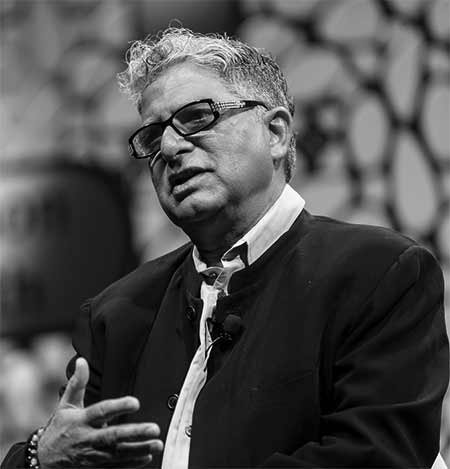
Dr. Deepak Chopra is a renowned alternative medicine advocate, author, and public speaker who has made significant contributions to the field of mind-body healing. With a background in internal medicine and endocrinology, Dr. Chopra is known for blending Eastern philosophies with Western science to promote holistic well-being and self-healing practices. He has written over 90 books on topics such as meditation, spirituality, and personal transformation, many of which have become bestsellers.

Chopra founded the Chopra Center for Wellbeing, founded by renowned physician Deepak Chopra and his colleague David Simon in 1996. The center offers wellness retreats, workshops, and educational programs that blend the principles of Eastern philosophy with Western medicine. The center’s mission is to empower individuals to take control of their health and well-being through a holistic approach that encompasses physical, mental, emotional, and spiritual aspects.

Chopra was born in New Delhi, British India to Krishan Lal Chopra and Pushpa Chopra. Dr. Chopra completed his primary education at St. Columba’s School in New Delhi and graduated from the prestigious All India Institute of Medical Sciences in 1969. He began his medical career by serving in rural India, where he encountered unique challenges, such as working in a village where the lights would go out whenever it rained. It was during this formative period that Dr. Chopra developed a keen interest in endocrinology, with a focus on neuroendocrinology, to explore the biological underpinnings of the impact of thoughts and emotions on health.

The Indian government had prohibited its doctors from taking the necessary exam to practice medicine in the United States. As a result, Chopra was required to travel to Sri Lanka in order to complete the exam. Upon successfully passing, he made his way to the United States to begin a clinical internship at Muhlenberg Hospital in Plainfield, New Jersey.

From 1971 to 1977, Chopra completed residencies in internal medicine at prestigious institutions such as the Lahey Clinic in Burlington, Massachusetts, the VA Medical Center, St. Elizabeths Medical Center, and Beth Israel Deaconess Medical Center in Boston. In 1973, he obtained his medical license in the state of Massachusetts and became board certified in internal medicine, with a specialization in endocrinology.

 He has taught at prestigious medical schools such as Tufts University, Boston University, and Harvard University. Additionally, he served as Chief of Staff at the New England Memorial Hospital (NEMH), which later became known as the Boston Regional Medical Center, located in Stoneham, Massachusetts. Following his time at NEMH, Dr. Chopra established a successful private practice in Boston specializing in endocrinology.

During his visit to New Delhi in 1981, he had the opportunity to meet with the esteemed Ayurvedic physician Brihaspati Dev Triguna, who was the head of the Indian Council for Ayurvedic Medicine. It was during this meeting that he received valuable advice that inspired him to delve deeper into the practices of Ayurveda. At the time, he was consuming copious amounts of black coffee and smoking a pack of cigarettes daily. In an effort to break these unhealthy habits, he turned to Transcendental Meditation for support. Since then, he has made meditation a daily practice, dedicating two hours every morning and thirty minutes every evening to this beneficial routine.

Dr. Chopra asserts that individuals have the potential to achieve optimal health, characterized by a state free from disease, pain, and the effects of aging. He views the human body as being supported by a quantum mechanical system made up of energy and information, rather than physical matter. According to Chopra, the process of aging is not fixed but rather fluid and malleable, capable of speeding up, slowing down, pausing, or even reversing based on one’s mental state. He maintains that his methods can effectively address chronic illnesses and promote overall well-being.

He was appointed as the inaugural president of the American Association of Ayurvedic Medicine, a co-founder of Maharishi Ayur-Veda Products International, and served as the medical director of the Maharishi Ayur-Veda Health Center in Lancaster, Massachusetts.

In June 1993, he relocated to California to assume the role of executive director at Sharp HealthCare’s Institute for Human Potential and Mind/Body Medicine. Additionally, he led the Center for Mind/Body Medicine, a prestigious clinic located within an exclusive resort in Del Mar, California. Dr. Deepak Chopra’s groundbreaking book “Ageless Body, Timeless Mind: The Quantum Alternative to Growing Old” was also published in 1993

In 2004, Dr. Chopra obtained his California medical license and currently holds an affiliation with Scripps Memorial Hospital in La Jolla, California. He serves as the owner and supervisor of the Mind-Body Medical Group within the Chopra Center, where he provides personalized guidance on nutrition, sleep-wake cycles, and stress management, integrating principles from mainstream medicine and Ayurveda. Dr. Chopra is a distinguished fellow of the American College of Physicians and a member of the American Association of Clinical Endocrinologists.

Dr. Chopra holds the position of adjunct professor in the marketing division at Columbia Business School and also serves as an adjunct professor of executive programs at the Kellogg School of Management at Northwestern University. Additionally, he is a featured lecturer at the annual Update in Internal Medicine event sponsored by Harvard Medical School and the Beth Israel Deaconess Medical Center.

Deepak Chopra and his wife have two adult children, Gotham Chopra and Mallika Chopra, as well as three grandchildren. As of 2019, Chopra has resided in a health-centric condominium in Manhattan. In July 2006, the Carnegie Corporation of New York honored him as a member of the inaugural class of the Great Immigrants Award.

Remembering Philanthropist Betty Wold Johnson

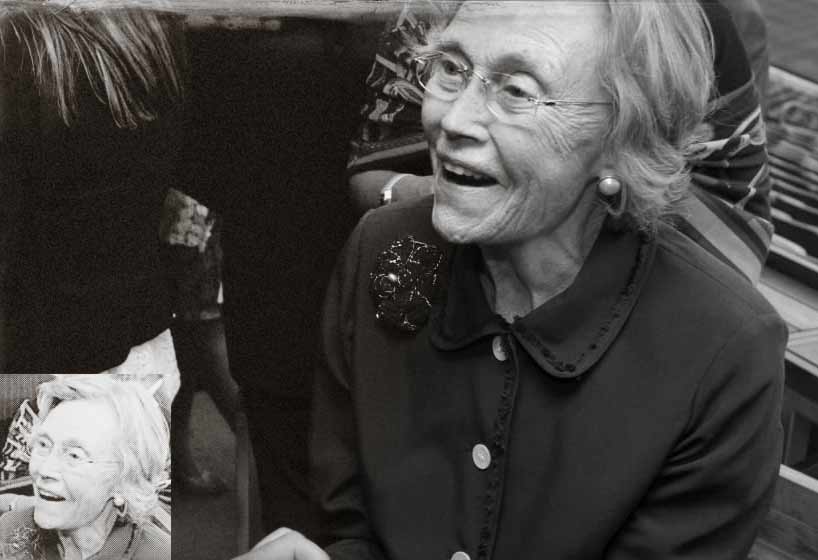
Betty Wold Johnson

Betty Wold Johnson touched the lives of thousands through her philanthropic work. She supported the arts, medicine, and science, all in the hopes of building a better tomorrow for those less fortunate. Her passing on May 5th, 2020, at the age of 99, reminded many of the numerous contributions she has made to society. Her life was rich in love, and she left behind a legacy of giving back to your community in whatever way possible. She was a long-time contributor to arts, education, and healthcare initiatives in New York and New Jersey, and her contributions will continue to live on to enrich these communities.

Many may recognize Betty as the “First Lady of the Jets”. Her youngest son, Christopher Johnson, is the CEO of the New York Jets, and her eldest son, Woody Johnson, is the United States Ambassador to Great Britain and Northern Ireland. Football was an important part of her life from a young age, and that passion for the sport would remain strong throughout her life.  She was actively involved in her children’s lives, even as adults, and offered hands-on support to the Jets team whenever possible. She built close friendships with many of the team players, who she lovingly referred to as her grandchildren, and they often stayed in touch years after the players had moved on from the team. Betty touched the lives of everyone who got to meet her and made it her life’s work to do what she could to help others.

Early Life

Betty Wold was raised in Minnesota. She often recounted stories of her childhood in which she and her father, Karl Christian Wold, would attend the Golden Gophers Games or listen to them on the radio when they were unable to physically attend. After the attack on Pearl Harbor, she enlisted in the Navy’s WAVE program (Women Accepted for Voluntary Emergency Services). Stationed at Corpus Christi, Texas, she helped to train pilots through flight simulators at the Naval Air Station in Rhode Island. She later fell in love and married Robert Wood Johnson III, grandson of one of the founders of the well-known brand Johnson & Johnson. Together, the couple raised five children until Robert died in 1970. In 1978, she married Douglas Bushnell, who died in 2007.

Her Contribution to the Arts

Betty Wold loved the art world and believed that the arts truly free the spirit. Unfortunately, the arts are often the first programs cut from schools facing budget constraints, and she made it a mission to support art accessibility. In 2008, she donated $11 million to New Jersey Performing Arts Center, the single largest individual gift in the center’s history. She also actively supported many different Princeton and New York art and science institutions. Some of these include Princeton Public Library, Nature Conservatory of New Jersey, the Metropolitan Museum of Art, and McCarter Theater, to which she donated $500,000 in honor of Emily Mann’s 30-year career as the artistic director. Betty was a firm believer that the arts should be accessible to everyone, regardless of social or economic standing.

Contributions to Healthcare

Betty Wold’s philanthropic endeavors crossed many different fields and services, including health care. She was one of the leading funders of the rebuilding of the Princeton Hospital. She also played a large role in Project Renewal, a nonprofit organization that provides aid to vulnerable New Yorkers, including men and women experiencing homelessness, mental health disorders, and substance abuse. It was important to Betty that everyone had access to affordable health care, and this group offered mobile health services along with helping people secure jobs and housing. Betty was a lead supporter of the annual Jets Kickoff Luncheon, created to benefit the Lupus Research Alliance in their mission to prevent, treat, and ultimately cure lupus.

Contributions to Education

Betty dedicated much of her life to supporting education in as many facets as possible. She was a large supporter of Princeton Day School, where she served as a trustee. In her time at the school, she underwrote several major initiatives to preserve the program, support faculty development, and improve the students’ experience. Many of these initiatives are still implemented to this day, including the STEAM program that offers interdisciplinary courses in science, technology, engineering, and mathematics. She even donated her Princeton home to the Hun School to be converted to a headmaster’s house.

Remembering Betty Wold

Betty Wold dedicated her career to philanthropic work in the arts, sciences, and health fields. She was a major contributor to Princeton, supporting her New York and New Jersey community in various ways throughout her life. She provided funding for numerous programs and initiatives to help others in all walks of life. Betty Wold’s work serves as a foundation for continued support and programming throughout the U.S., so her work will continue to benefit countless others far into the future.

1 11 12 13 14 15 37
Go to Top